

Services like ETF Income Maximizer can do everything right, but none of that matters if they’re not cost-effective.
That’s why I made it a point to understand what the platform really delivers, and if what you get justifies the money you have to put into it.
Read on to get my full take on ETF Income Maximizer’s price structure, tiers of service, upsells, and anything else you should know about costs before signing up.
Why Pricing Matters More Than It Seems
 Cheap or expensive is a relative term, and I struggle to see how they fit into income-focused strategies.
You always have to make an investment, but I always look more closely at what potential outcomes could be.
After all, pricing only makes sense when you connect it to what the strategy can actually produce.
Hearing how a $1,000 starting point after buying the service can generate around $1,398 per year under the right conditions is undoubtedly a head turner.
Even if results vary, it becomes clear that the pricing is not meant to stand alone.
How ETF Income Maximizer Pricing Is Structured
What I love about ETF Income Maximizer is that you get unfiltered access to every available tool for just one low cost.
Plaehn’s current deal sets that price at just $49 annually, a considerable discount considering the system and supporting tools you have access to.
I estimate its total value at well over $1,000, meaning you’re saving 95% off the total price.
There are no limitations on what you get even with this discount, so you’ll get the entire strategy and supporting tools all rolled up into a nice package.
Even at time of renewal, the cost remains low at $99 per year.
I’ve not seen any upsells or anything to that effect either, which is another huge plus.
To that point, Investor’s Alley does have several more premium services you may hear about during your time as a member, but I haven’t felt any pressure to subscribe.
How the Pricing Compares to Traditional Investing Costs
 It’s hard to get too stressed out about a $49 price tag.
I review over 100 services per year, and this definitely sits on the more cost-effective end of what’s out there, even though it takes more of a unique approach to income.
When you compare this structure to traditional investing, the price difference becomes even easier to see.
Working with financial advisors or actively managed portfolios often involves ongoing fees that grow as your capital increases.
In many cases, those costs are tied to your account size rather than the income you generate.
Here, you’re not handing over your capital to someone else but using a structured system to guide your own decisions.
Is ETF Income Maximizer Worth the Price?
Bringing pricing and performance numbers into focus really helps answer this question.
Looking at how income can grow over time makes the overall value easier to understand.
In one scenario, monthly payouts begin around $340, increase to $821, and eventually approach $2,000 per month as the strategy develops.
Not every outcome will shape up quite like this, but it doesn’t take long to recoup your service cost and initial investment with these kinds of results.
I don’t share these to represent fixed outcomes, but they do show how the strategy is designed to scale.
As the income grows, the pricing starts to feel much smaller in comparison.
That’s where the real value becomes clear. The cost is static, but the income potential is not.
 Final Thoughts: How to Think About the Cost
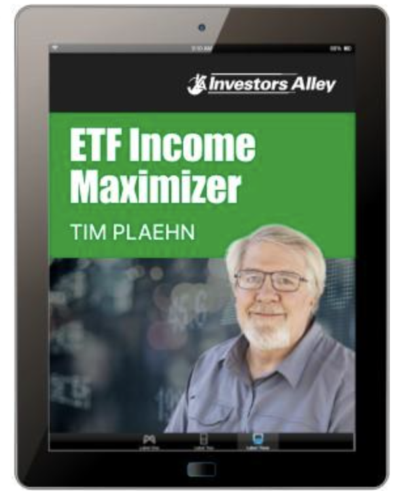
Once everything is laid out, the pricing becomes much easier to understand. It’s not just about paying for access, but about what that access allows you to do.
The strategy is designed to generate income, and you’re given everything you need to succeed for just one low annual cost.
I like to think of ETF Income Maximizer as the entry point to this system and the success it can bring, and it’s worth the cost in my opinion.
If you want to see how everything connects, including the full breakdown of the strategy and how each level fits together, the main ETF Income Maximizer Review brings it all into one place.

 Tags:
Tags: