

Having access to a service is one thing. Knowing how to use it is another.
Even strong technology ideas require structure, patience, and risk awareness to apply effectively.
This guide explains how to use The Near Future Report, how the portfolio framework works, how it typically handles recommendations, and how risk discipline fits into Jeff Brown’s technology-focused research approach.
 Understanding The Research Philosophy Behind The Near Future Report

The Near Future Report centers on identifying major technology shifts before everyone else hears about them.
By getting in early on breakout trends, you’re afforded a longer runway for generating profits than positioning after a stock becomes newsworthy.
It may not sound like much, but that timing difference can be astronomical.
These aren’t obscure recommendations, either. Leave it to the Near Future Report team to track down viable options based on extensive research.
Led by industry insider Jeff Brown, the service follows through on connections in high places we simply don’t have to locate these opportunities when they’re still quiet.
How The Model Portfolio Is Structured
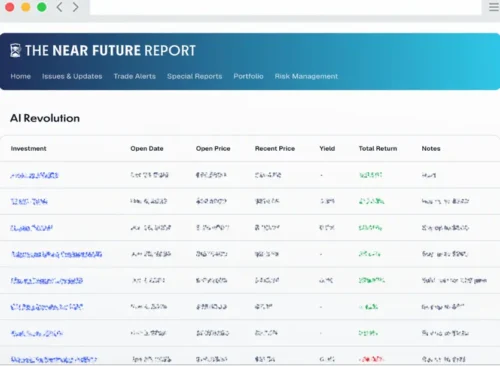 You’ll want to turn to the model portfolio any time you’re looking for recommendations or need an update.
Each position remains in The Near Future Report’s current buy range, meaning they’re all viable for investment.
Jeff Brown lists each stock’s original recommendation date, suggested buy-up-to range, and current status.
This creates a clear reference framework showing how positions connect to broader technology themes.
This transparency allows a clear understanding of how positions progress over time.
Listing buy ranges rather than exact price targets also reflects the reality that technology stocks often move quickly and rarely present perfect entry points.
How New Recommendations Are Typically Introduced
New opportunities generally arrive through monthly research updates, resulting in approximately 12 new technology opportunities per year.
Each recommendation typically connects to a broader technological shift rather than appearing as a short-term trade idea.
Upon reading the newsletter, you’ll uncover buy-up-to price ranges, helping to prevent overspending.
This reflects the practical reality that technology stocks can move quickly as news develops.
Portfolio Positioning Approach
Positioning across multiple layers of technology helps manage exposure while still participating in innovation trends.
Rather than concentrating exposure in one company or one niche, the research frequently connects opportunities across semiconductor providers, computing platforms, infrastructure companies, and enabling technologies.
This layered exposure reflects how technology ecosystems function. Artificial intelligence cannot operate without computing hardware.
Computing hardware depends on semiconductor production. Semiconductor growth depends on equipment and manufacturing capacity.
This thematic diversification reflects a structural understanding of how innovation spreads across industries.
Rather than depending on one outcome, positioning across the technology stack can help balance exposure while maintaining participation in long-term innovation.
Risk Controls Within Technology Research
 Risk awareness plays an important role because technology sectors often experience volatility as adoption develops.
Even dominant companies may experience corrections as expectations change, so watching your position size can offer some form of protection.
Technology exposure often works best when positions represent portions of a diversified portfolio rather than concentrated bets.
This helps reduce the impact of volatility within any single company.
Time horizon also functions as a risk control. Infrastructure trends, such as the expansion of artificial intelligence, often develop over years rather than quarters.
Viewing positions over longer time horizons often helps reduce the influence of short-term price movements.
How Updates And Alerts Help Manage Positions
For me, the ongoing updates play a critical role in getting the most out of The Near Future Report’s research.
Weekly updates typically address developments affecting existing positions, including earnings developments, sector changes, and technological progress affecting demand.
Urgent alerts may also come your way when meaningful developments occur.
Technology’s landscape shifts often, and having these communications helps you stay aligned with what’s happening.
Maintaining awareness of these developments helps ensure positions remain connected to their original themes while allowing adjustments when conditions change.
How Members Typically Apply Portfolio Discipline
Portfolio discipline often begins with respecting suggested entry ranges.
Buy-up-to prices help manage risk by avoiding purchases after significant price movement, helping maintain alignment between risk and opportunity.
Gradual positioning can also help manage volatility. Technology stocks often move in cycles.
Entering positions gradually can help reduce the impact of short-term price swings.
Diversification across multiple technology themes also reinforces discipline.
Exposure across artificial intelligence infrastructure, semiconductor demand, and computing platforms reflects the broader nature of technology adoption.
Patience often remains one of the most important elements. Infrastructure adoption rarely unfolds quickly.
Allowing time for technological expansion often aligns better with how innovation develops.
Why Research Structure Matters More Than Individual Picks
 Long-term outcomes often depend more on research structure than individual selections.
A repeatable process for identifying technology trends often matters more than any single recommendation.
Infrastructure-focused research tends to be repeatable because technology cycles often follow predictable patterns.
Stocks typically first enter a proof-of-concept phase where almost no one knows they exist.
They then make their way into the spotlight as the technology shows itself to be useful before becoming the next best thing since sliced bread.
Utilizing that structure helps enter in at the right time, and The Near Future Report tries to target that window between proof of concept and too big to invest in.
Many recommendations stack upon each other as part of a bigger trend, providing more clarity and insight than random, isolated ones.
Common Mistakes When Following Research
I often see folks concentrating too heavily on a single opportunity.
Technology research tends to work best when exposure spans multiple themes rather than relying on one outcome.
Another mistake involves reacting too quickly to short-term volatility.
Technology adoption often includes price swings before long-term growth develops. Reacting to short-term changes can disrupt long-term positioning.
Ignoring suggested entry ranges can also create unnecessary risk. Buy ranges exist to help manage volatility.
Entering positions far above suggested ranges may increase downside exposure.
Lack of patience often represents the most common mistake. Technology adoption typically requires time.
Allowing research themes to develop often produces better alignment with innovation cycles.
Why Technology Requires Portfolio Discipline
 Technology investing often produces both strong winners and weaker performers. Maintaining discipline helps balance these outcomes.
Exposure across multiple layers of innovation often helps manage variability.
Many companies look great on paper but ultimately don’t live up to expectations, especially in a world like artificial intelligence.
This is also where a service like The Near Future Report steps in to sift the wheat from the chaff.
Still, focusing on technological adoption rather than short-term narratives often helps maintain perspective during volatility.
Final Thoughts On Using The Near Future Report Effectively
Applying technology research effectively depends on structure, patience, and understanding how innovation develops.
Viewing recommendations within broader technology themes often creates a clearer framework than focusing on individual outcomes.
The combination of a model portfolio, ongoing updates, and thematic research creates a structured approach to following technology trends.
If you’re interested in artificial intelligence infrastructure, semiconductor expansion, and computing growth, this framework offers a disciplined way to follow innovation cycles.
Those interested in Jeff Brown’s technology research can explore The Near Future Report as a structured entry point into understanding the long-term technological shifts shaping the next phase of digital growth.

 Tags:
Tags: