

Tim Sykes has spent more than two decades building his name in penny stocks, but experience alone is not enough to make someone worth following.
The stronger case comes from the mix of documented profits, real trade examples, successful students, and a teaching style that gives risk as much attention as potential upside.
In this guide to Tim Sykes’ background and credibility, I’ll look at the track record behind his reputation and whether that experience makes him a trustworthy editor of The Tim Sykes Letter.
 Who Is Tim Sykes?
 Who Is Tim Sykes?
Tim Sykes is a penny-stock specialist, market educator, and the editor of The Tim Sykes Letter.
His work centers on low-priced stocks and small-cap companies, where one contract, financing update, product launch, or burst of volume can create a sharp move.
He built his career around a volatile corner of the stock market and stayed close to it for more than 20 years.
His work now combines research, education, and strategy development.
The same attention to catalysts, volume, timing, and price action shapes the ideas he shares with members.
More Than 20 Years in Small Stocks
Tim has spent over two decades working with penny stocks and small-cap companies.
That length of experience carries real weight because these stocks behave differently from large, heavily followed businesses.
A small company can rise after one late press release, then reverse when volume dries up.
Thin liquidity can create wide spreads, poor entries, and difficult exits.
Weak fundamentals and promotional activity can also turn a promising setup into a costly mistake.
Tim has dealt with those conditions through several market cycles.
Longevity does not mean every idea succeeds, but it does give him a deeper base of pattern recognition than someone who entered the space during one hot year and built a business around a few lucky results.
Has Tim Sykes Made Real Money?
Yes. Tim has documented millions in profits across his career.
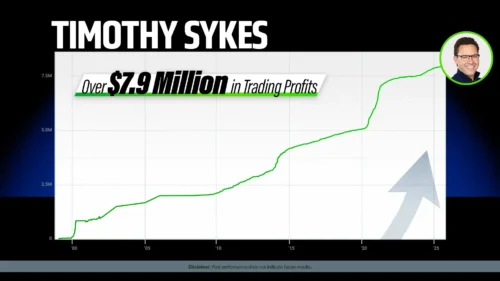 That gives his teaching more credibility than a strategy built only around simulations, theory, or perfect historical charts.
He has placed real trades, dealt with real liquidity, and faced the same execution problems his students need to understand.
I’ve heard he’s made thousands in profit from a single overnight trade, but you can’t treat something like that as a normal result.
Account size, entry timing, liquidity, and position size can significantly affect the outcome.
The better takeaway is that Tim has applied his methods with real money and not fabricated in a simulation.
Does Tim Show Both Wins and Losses?
Transparency matters in penny stocks because no strategy produces a perfect record.
Tim has built a reputation for discussing both successful trades and setbacks. That gives a more realistic view than a highlight reel filled only with large winners.
Failed breakouts, missed entries, poor fills, and sudden reversals are part of this market.
I wouldn’t trust anyone who hides negative outcomes or makes the process look easier than it actually is.
Tim also teaches through real trade examples and recorded screen sessions, letting folks see in real-time how he scans for ideas, reacts to after-hours news, and prepares near the closing bell.
 Tim Sykes as an Educator
 Tim Sykes as an Educator
Personal profits do not automatically make someone a good teacher.
Tim strengthens his case by breaking his process into practical lessons that cover market basics, chart patterns, fundamental analysis, volume, price action, risk management, and common scams in the low-cap space.
Explaining the full picture is a huge boon in a space where folks are often blinded by the thought of large gains.
Tim spends time on why a setup exists, what news may move it, how volume affects price, and when the original idea may no longer make sense.
Practical Training Instead of Theory
Recorded screen sessions give members an over-the-shoulder look at Tim’s process.
For instance, you can see how he screens for overnight potential, studies late-day developments, and prepares before the market closes.
There aren’t many better ways to learn than watching someone do the work, helping turn abstract concepts into an actionable process.
His explanations also stay accessible by breaking complex ideas into clear steps rather than burying them under technical language.
Starting Small and Managing Risk
Tim encourages members to begin with small positions, build confidence, and grow capital responsibly.
That advice may sound basic, but it matters more in penny stocks than in slower markets.
A thinly traded company can reverse without warning. Oversized positions can turn a manageable mistake into a serious loss.
Tim also uses a checklist approach for preparation, execution, and review. That structure helps reduce impulsive choices and keeps attention on discipline rather than excitement.
What Do His Students Add to His Credibility?
 Tim has mentored students who later achieved seven-figure results.
That adds weight to his teaching record, as it shows that some people have learned his framework and applied it successfully.
Still, you can’t treat those outcomes as typical either.
A standout student may spend years studying, make thousands of decisions, and accept more risk than the average subscriber.
Account size, market conditions, effort, and emotional control also shape the final result.
My big takeaway here is that Tim’s method is teachable, and it actually works.
Tim’s Risk Management Philosophy
Tim would be much harder to trust if his message focused only on giant winners.
Instead, he gives real attention to preparation, discipline, volume, price action, and the scams that often appear in low-cap stocks.
His lessons also cover the psychological side of the process.
It’s important to know when to avoid chasing, when to accept a small loss, and when a setup no longer matches the plan.
None of that makes penny stocks safe.
Even a strong catalyst can fail, poor liquidity can make an exit difficult, and a promising company can lose market attention before the story develops.
Tim’s strength is that he treats those problems as part of the strategy rather than hiding them behind headline gains.
That risk-first mindset is one of the best reasons to take his work seriously.
Does Tim’s Background Match The Tim Sykes Letter?
Comparing the two, it’s clear to me how Tim’s background perfectly matches this service.
Tim’s strongest skills sit in low-priced stocks, small-cap companies, news catalysts, price action, and short bursts of market attention.
Those are the same areas that shape The Tim Sykes Letter.
He is not trying to lead a conservative bond service or a slow dividend publication. The research stays inside the niche he has studied for more than two decades.
That alignment improves credibility.
You’ll receive ideas from someone who understands how quickly small stocks can move, why volume matters, and how a promising setup can break down.
His strategy also influences XGPT, which screens smaller companies through the same types of patterns Tim has spent years studying.
Where Readers Should Remain Skeptical
Tim’s experience is strong, but no background removes the need for personal judgment.
Millions in historical profits, strong overnight results, and successful students can attract attention. None of those figures tells you what a typical subscriber will earn.
Tim may have a larger account, faster execution, and a different tolerance for risk than the average member.
Penny stocks also remain volatile. Even a strong setup can fail after weak volume, poor news, or a sudden shift in market mood.
Healthy skepticism means using Tim’s guidance as informed research rather than copying every decision.
His background gives you a good reason to listen, but you’ll still need to think for yourself.

Is Tim Sykes Legit?
Indeed, Tim Sykes is a legitimate small-stock specialist with more than 20 years of experience, millions in documented profits, a long teaching history, and a clear focus on practical execution.
Among all that, his strongest credential is consistency.
He has stayed within the same niche, taught the same market behavior he studies himself, and built his lessons around preparation, risk, and discipline.
That promotional style can be bold, and his largest success stories may look more dramatic than normal member outcomes.
That does not erase his experience.
I judge Tim as a specialist in a speculative part of the market, not as a promise of easy wealth. On that basis, he is a credible editor for The Tim Sykes Letter.
Should You Subscribe Based on Tim’s Background?
Tim’s experience adds a real positive layer for considering this service.
More than two decades in small stocks, millions in documented profits, practical education, and a clear risk framework give the newsletter more substance than a service led by an anonymous stock promoter.
The fit still depends on what you want.
Anyone seeking slow dividend growth or passive income may not connect with his style. Those interested in catalyst-driven small stocks should find his background far more relevant.
Even if you’re still on the fence, the Tim Sykes Letter offers a 30-day money-back guarantee to give you time to make that determination.
Final Takeaway
Tim Sykes brings more than 20 years of small-stock experience, millions in documented profits, practical teaching, and a strong focus on risk.
He has also trained successful students and built The Tim Sykes Letter around the market niche he knows best.
No background can guarantee future results, but Tim has enough direct experience and educational depth to deserve serious attention.
Join The Tim Sykes Letter if you want small-stock research from an editor with decades of hands-on experience and a clear framework for finding opportunities while controlling risk.

 Tags:
Tags: