


A flashy stock is easy to find. Knowing why it made the cut is a different thing entirely.
Sean Brodrick every Wealth Megatrends recommendation around major economic shifts, supply shortages, government priorities, and the companies sitting closest to those pressure points.
He has spent three decades visiting mines, grilling geologists, and panning for gold in Alaska while watching for grizzly bears.
In this Wealth Megatrends stock selection guide, I’ll explain how his megatrend strategy turns broad themes like AI, critical minerals, and precious metals into specific recommendations.
 What Does “Megatrend” Mean in Wealth Megatrends?
 What Does “Megatrend” Mean in Wealth Megatrends?
A megatrend is a large economic, industrial, or geopolitical change that can reshape markets for years, not one strong quarter.
Sean looks for forces that may keep building: rising commodity demand, supply shortages, government spending, national security needs, and new technology.
Gold and silver fit the model because they move through long cycles driven by inflation, currency pressure, industrial use, and constrained production.
AI shows how wide these themes can get.
Chipmakers and software firms get the headlines, but AI data centers still need electricity, semiconductors, silver, grid upgrades, and rare earth elements.
I find those physical inputs more interesting than the headline names because they often carry less competition and more durable demand.
Sean studies exactly those bottlenecks.
The Economic Cycle Comes Before the Stock
Sean does not start with a ticker and work backward. He starts by asking where the economy, commodity market, or industry cycle is heading.
 Each issue drops on the third Friday of every month with a fresh recommendation tied to the current cycle.
That leaves room to move between gold, silver, uranium, critical minerals, energy, and technology-linked resource ideas as conditions change.
Inflation improves the case for precious metals. Government spending raises the value of domestic mining assets. AI growth drives demand for power, metals, and grid infrastructure.
AI growth drives demand for power, metals, and grid infrastructure.
Sean’s gold target of $6,900, more than double where gold sits today, sits inside this framework.
I appreciate that the cycle logic comes first and the ticker follows, because it gives every recommendation a reason to exist beyond price momentum.
The Bottleneck Matters More Than the Headline
The most useful part of Sean Brodrick’s method is how often he looks one layer beneath the obvious story.
Most people search for the next chipmaker.
Sean asks what those chips, servers, and data centers physically need to operate.
That leads him toward energy infrastructure, silver, rare earths, and critical minerals.
The better opportunity is often with the company supplying the bottleneck, not the household name selling the final product.
Gold mining is the same dynamic: gold prices rising from $2,000 to $3,000 per ounce does not just add $1,000 per ounce for a miner.
If their production cost stays at $1,000, their profit doubles.
That is operating leverage, and it is why quality miners can outperform gold itself by a wide margin when prices run.
The Numbers Have to Support the Theme
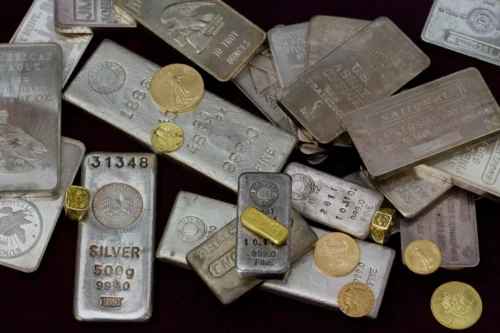 A broad idea can sound convincing without producing a good stock. Sean needs data that shows the pressure is large enough to matter.
Silver is a clear example: eight consecutive years of declining production while demand is expected to rise 170% by decade’s end.
That is a structural gap, not a dip.
Gold has averaged 22% per year since 2000, with only four losing years in 25. Central banks are buying gold at historic rates, IMF data shows dollar reserves at 25-year lows, and John Paulson (who made $20 billion calling 2008) is loading up again.
Find the shortage, confirm the demand driver, and find the company.
How Sean Narrows the Theme Into a Company
Once the megatrend checks out, Sean looks for businesses with direct exposure and filters every candidate through his GOLD checklist.Geography: the project must be in a business-friendly jurisdiction with a real rule of law.
Ore Quality: grade matters, ideally at least 1 gram of gold per ton of ore, verified in person.
Leadership: management track record is arguably more important than the resource itself; people who have hit paydirt once are far more likely to do it again.
Discovery: he calls this “blue sky,” meaning the resource has room to grow in all directions.
One company Sean tracks is set to more than double production from 220,000 ounces to 500,000, adding roughly $750 million in potential annual revenue at current prices.
A good candidate needs more than a promising theme. It needs a useful asset, a capable team, a workable development path, and enough upside to justify the risk.
Field Research Tests the Story
 Mining companies can look spectacular in a press release and terrible in person. There is only one way to find out which one is true.
Sean has spent three decades doing boots-on-the-ground research at mine sites around the world.
He visits mines, puts on a helmet and goes underground, speaks with geologists and executives, studies geological reports, and reviews financial statements.
He has traveled to the largest undeveloped gold mine in the mountains of Chile, searched for opportunities in Nunavut, and panned for gold in Alaska while watching for grizzly bears.
His nickname, the “Indiana Jones of Mining,” is well-earned. I see this field research requirement as the most honest part of the service.
The story has been tested against physical reality, not just a spreadsheet.
 Weiss Ratings Adds a Data Check
 Weiss Ratings Adds a Data Check
Sean brings the theme, industry knowledge, and company research. Weiss Ratings adds a broader quantitative layer.
The Wall Street Journal ranked Weiss number one for stock ratings, calling it more accurate and more profitable than Deutsche Bank, Merrill Lynch, JPMorgan Chase, Goldman Sachs, and Standard and Poor’s.
Over 20 years, Weiss has issued Buy alerts on more than 11,194 stocks.
The average gain on those Buy-rated stocks has been 300%, including all losers in the group.
Subscribers get access to more than 53,000 Weiss Ratings across stocks, banks, cryptos, and insurance companies.
I rate this external check as valuable precisely because it is independent.
Weiss does not accept payment from the companies it rates, which eliminates the most common conflict in financial research.
Catalysts Decide When the Idea Becomes Timely
A megatrend can last for years, but a stock still needs a reason to move.
Sean looks for catalysts such as government grants, new production, mine expansion, supply restrictions, strategic contracts, institutional buying, or higher commodity prices.
A domestic mine may own the right resource for a long time without attracting much attention.
The picture changes when national security concerns rise, government funding appears, or large institutions begin building positions.
Gold clearing $3,200 per ounce, a level Sean called nearly to the day, is a catalyst in itself.
When a commodity hits all-time highs and miners carry significant operating leverage, the timing gap between the theme and the stock price can close fast.
Why Smaller Stocks Can Make the List
Small companies can offer more upside when a neglected asset suddenly becomes important.
A large mining group may benefit from rising demand, but one project rarely changes the company in a meaningful way.
A smaller business can move hard if a mine, permit, grant, or supply agreement reshapes its entire outlook.
That is part of the appeal behind Sean’s under-$10 critical minerals ideas.
He actively looks for junior miners with proven resources, competent management, and assets that the market has not fully priced.
98 mining stocks delivered at least 1,000% gains in the 2000s bull market.
International Tower Hill Mines hit 5,090%. Metallis Resources hit 7,746%. LKA Gold hit 9,850%.
Selective highlights, not typical outcomes.
Smaller companies are less liquid and more project-dependent.
Size creates the opportunity. The GOLD checklist filters whether it is worth taking.
Recommendations Still Need Monitoring
Choosing a stock is not the end of the process.
Commodity prices can weaken. Funding can fall through. A permit can take longer than expected. Management can miss targets.
The broader megatrend may stay intact while one company stops being the best way to play it.
You receive ASAP alerts when market conditions shift or a recommendation needs action.
That ongoing review matters with theme investing. A strong silver, uranium, gold, or critical minerals cycle does not require loyalty to one ticker. The company still has to earn its place.
I find that discipline around exits and updates to be what separates a useful research service from a one-time stock tip that you are left holding indefinitely.
 Final Verdict: Does the Selection Process Make Sense?
 Final Verdict: Does the Selection Process Make Sense?
Yes, the Wealth Megatrends is one of the more coherent frameworks in the resource investing space.
He starts with the economic cycle, identifies a measurable shortage or demand driver, narrows the theme to companies with relevant assets, checks management and project quality, looks for a catalyst, and adds support from Weiss Ratings.
You get 12 issues, ASAP alerts, 53,000+ Weiss Ratings (WSJ ranked number one), and three bonus reports: 5 Essential Gold Stocks for the Bull Market, Ride the Silver Bull, and Guide to Buying Physical Gold and Silver.
All for $49 with a 365-day guarantee.
Resource stocks and commodities are volatile.
But the process behind the picks is as structured as you will find in this space.

 Tags:
Tags: