


A service may flaunt massive wealth-generating opportunities, but that matters little if it can’t actually deliver.
Even with a good market call, entry timing and exit discipline also play an important role in an investment’s ultimate success.
During my The Primary Trend review, I had to see for myself how the service’s track record actually stacks up.
In this guide, I’ll break down The Primary Trend’s strongest claims, explain what they really prove, and show where the evidence remains incomplete when judging the service’s track record.
What Counts as a Genuine Track Record?
A proper track record should cover every official recommendation, including the suggested entry, final exit, holding period, closed return, and any loss taken along the way.
That sounds obvious, but large performance claims often leave out those details.
A stock may rise 100% from its lowest price without anyone ever buying near that level.
Another may reach a large paper gain, then give back part of the move before the final sell alert.
Broad market calls belong in a separate category.
Calling a bottom or warning about a selloff can demonstrate strong judgment, but it does not mean every stock that moved afterward appeared in the portfolio.
Historical winners require the same care.
They can show what happened during a similar cycle without proving what current members earned.
Parets deserves credit for the calls he got right, but it requires all the data to paint a full picture.
 JC Parets’ October 2022 Market-Bottom Call
 JC Parets’ October 2022 Market-Bottom Call
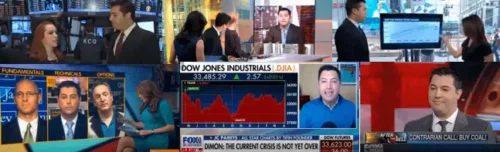
One of Parets’ strongest public calls came in October 2022, when he appeared on Fox Business and argued that the market had bottomed and it was time to buy.
That view went against the mood of the moment.
Inflation remained high, recession fears dominated the news, and many analysts still expected stocks to fall further.
The market later entered a powerful advance.
Parets points to 32 companies that rose at least tenfold from that period. Palantir approached a 20X move, while AppLovin climbed as much as 46X.
Those numbers support the timing of his broader call.
Recognizing a major low while fear remains widespread is difficult, and the strength that followed gives his view real credibility.
Still, we can’t count all of those 32 stocks as The Primary Trend recommendations.
The strongest conclusion is that Parets identified a major change in market conditions before the recovery became obvious.
Why the 2022 Call Matters
The October 2022 call shows how broad market direction affects nearly every stock in a portfolio.
A good company can struggle when liquidity tightens and risk appetite disappears.
That same business may perform far better once breadth improves and money begins flowing back into equities.
Parets turned bullish before economic headlines offered much comfort.
That fits his technical method, which focuses on price action, momentum, breadth, and relative strength instead of waiting for a reassuring narrative.
For me, the most important detail is timing. Parets saw improving market conditions while many people remained focused on recession risk.
The February 2020 Risk Warning
Parets also has a notable defensive call from February 2020.
He warned that the risks tied to owning stocks had become elevated and favored bonds over technology as the COVID-driven selloff began.
The Nasdaq then fell about 22% in one month, while bonds gained by double digits.
This example adds balance to his record. Strong performance does not come only from finding stocks that rise. Protecting capital when conditions weaken can have just as much impact over time.
A 50% loss requires a 100% gain just to break even. Avoiding part of a severe decline can leave a portfolio in much better shape once the next bullish cycle starts.
No analyst will sidestep every correction. Technical warnings may arrive early, and false breakdowns can lead to frustrating exits.
Even so, the 2020 call shows that Parets was able to reduce risk before the full extent of the damage became clear.
The Earlier 2008 Warning
Parets’ technical process also shows up in identifying serious market risk in early 2008, months before the financial crisis reached its worst stage.
That call adds historical depth to his record, suggesting to me that his focus on weakening trends and capital preservation did not begin with the pandemic crash or something more recent.
I wasn’t able to find as many details about this event though, so I would treat the 2008 warning as supporting evidence rather than a headline result.
It strengthens the case that Parets has spent years watching for major changes in market structure, but the 2020 and 2022 calls remain easier to evaluate because their timing and outcomes are clearer.
Historical Commodity Winners Behind the Chaos Cycle
Some of the largest figures tied to Parets’ current focus come from earlier commodity booms.
The Gold BUGS Index rose about 1,300% between 2000 and 2010. Goldcorp gained close to 2,000%, while Coeur Mining climbed roughly 1,000%.
Kinross Gold jumped roughly 21 times its value, and Yamana Gold rose about 35-fold during its strongest run.
Northern Dynasty gained more than 6,200%, while Paladin Energy became one of the standout uranium winners from that era.
These figures help explain why Parets sees large upside when resources and hard assets enter a sustained leadership cycle.
Commodity moves can last for years once supply limits, inflation pressure, and rising demand begin working together.
However, these were historical market examples, not verified The Primary Trend recommendations.
Their role is to show what a powerful resource cycle can produce, not what every current position should be expected to deliver.
 The Buenaventura Mining Example
 The Buenaventura Mining Example
Buenaventura Mining gives the Chaos Cycle strategy a more specific company example.
Its shares previously moved from roughly $5 to above $50, representing a ten-fold increase during an earlier resource cycle.
Parets now sees renewed potential here because the business carries exposure to both gold and copper through several major assets.
That earlier move helps explain why the stock has returned to his radar.
It has already shown that it can respond strongly when precious metals and industrial commodities attract sustained capital.
Still, the old gain is not a result of the current recommendation.
A new position begins from today’s buy range, and its performance will depend on what happens after members act.
Does the NOW Score Prove Performance?
Parets uses the NOW Score to rank securities from 0 to 100 based on trend, relative strength, and momentum.
He studies roughly 5,000 charts each week, then uses those signals to narrow the field to a smaller group of potential leaders.
Current Chaos Cycle names rank in the high 80s and 90s, with one featured company reaching 100 and another scoring near 90.5.
A high NOW Score is not a return forecast. It shows that a stock currently meets Parets’ technical standards. The score can weaken, and even a top-ranked idea can lose money.
 What The Primary Trend Results Do Not Show
 What The Primary Trend Results Do Not Show
The largest limitation is the lack of a complete, independently audited history covering every recommendation.
There is no verified service-wide win rate, annualized return, average winner, average loser, maximum drawdown, or consistent benchmark comparison.
That makes it difficult to summarize the full record with one clean percentage.
Selected calls can show skill, but they do not reveal how all positions performed together.
Open gains also need care. A strong position may give back part of its advance before the final exit.
The closed return is what determines the result that members could realistically capture.
This gap does not erase the strength of Parets’ 2020 and 2022 calls, but it means you should not base expected returns on a few exceptional examples.
How I Would Judge Future Results
Each official recommendation should be tracked from the stated buy level through the final sell instruction.
Holding periods make an obvious difference because a 30% gain over three months differs from the same return over three years.
You also need to compare results with a relevant benchmark across the same dates.
Losing positions deserve equal attention. A trend strategy may close several small losses before catching one sustained move.
That can still work when the larger winners outweigh the failed setups.
Exit discipline matters too. Parets’ process becomes more credible when weak ideas are removed instead of being left open until they recover.
 Is The Primary Trend Performance Credible?
 Is The Primary Trend Performance Credible?
Yes, in my expereince the evidence supports a positive but measured verdict.
Parets deserves credit for turning bullish near the October 2022 low and warning about elevated equity risk in February 2020.
Both calls came at difficult moments and were followed by substantial moves in the direction he expected.
His process also has real structure. The NOW Score measures trend, relative strength, and momentum, while his weekly research spans roughly 5,000 charts.
The limitation is transparency.
It’s simply not possible to treat historical commodity winners like Palantir, AppLovin, and the other tenfold gainers as official service results.
Overall, The Primary Trend track record shows credible market judgment and a disciplined technical framework.
It does not yet offer enough complete data to support a verified win rate, but the strongest public calls give readers a solid reason to take JC Parets seriously.

 Tags:
Tags: