


Bold market forecasts can draw serious attention, but many amount to little more than hype tactics with no real substance.
That’s where Marc Chaikin is interesting, because his Frontier AI forecast is backed by the Power Gauge, a stock rating system built to sort stronger names from weaker ones.
In this guide, I’ll discover whether Marc Chaikin’s predictions really do stand out in the crowd and, if so, what metrics he uses to back them up.
 Start With the Power Gauge Rating
 Start With the Power Gauge Rating
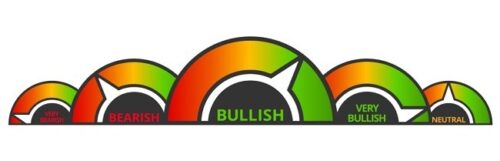
The first resource I would use is the Power Gauge rating itself, which evaluates more than 5,000 stocks and gives each one a Bullish, Neutral, or Bearish rating.
That rating comes from 20 factors spread across Financials, Earnings, Technicals, and Experts to help frame whether a stock is a buy, hold, or sell.
Forecasts can sound exciting, but seeing these factors laid out gives you a stronger foundation to stand on.
The rating history matters too.
A recent upgrade can point to improving conditions, while a downgrade may signal weaker money flow, earnings, price action, or expert activity.
Use Chaikin Money Flow to Check Buying Pressure
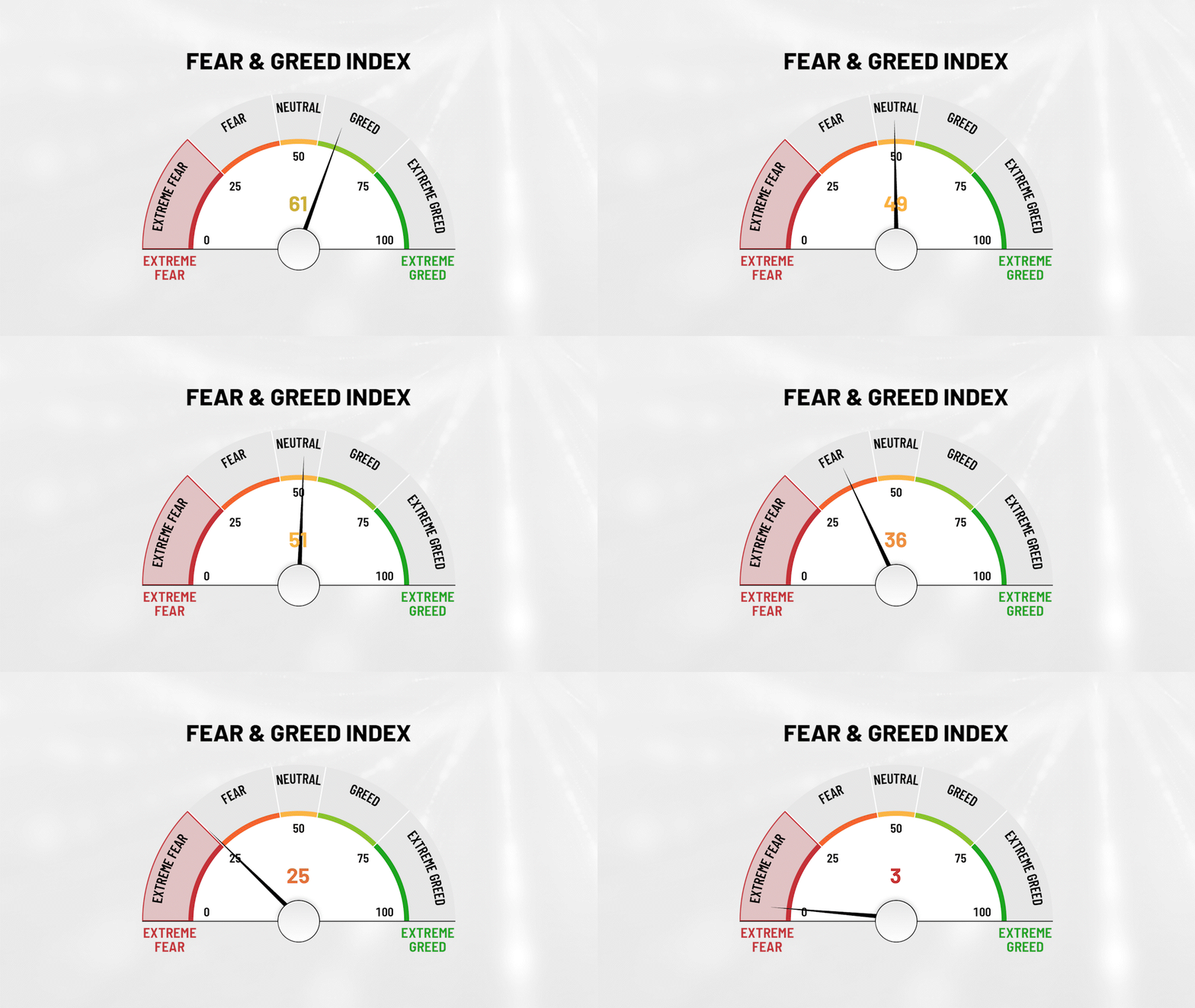 Chaikin Money Flow is one of the most useful tools behind Marc’s work, as it tracks buying and selling pressure through price and volume.
You get a hint of whether money is entering or leaving a stock, like large buyers leaving breadcrumbs before a price shift actually occurs.
Additionally, a company may start showing unusual strength before the news reaches the wider market.
Phathom Pharmaceuticals is a strong example. The Power Gauge turned Bullish three days before major FDA news, and the stock gained 114% over the next ten days.
There was no secret knowledge here; the system simply detected unusual buying pressure before the market understood the reason.
Check the Company’s SEC Filings
Once the rating and money flow look interesting, the next step is checking the business, which is where SEC filings come in.
SEC filings can confirm revenue sources, debt levels, cash, customer concentration, risk factors, capital spending, and management commentary.
Seeing that a company has huge cash reserves and little to no long-term debt can go a long way in your assessment.
Use these themes to uncover underlying momentum in a stock that could come from a fast-moving theme like artificial intelligence or defense.
I think of it as a verification process: a company needs more than an AI label.
It should have products, customers, or financial strength that connect directly to the opportunity.
Review Earnings Reports and Company Updates
 Earnings reports show whether the story is turning into real business performance.
A company may sound perfectly positioned for a theme like AI, but the numbers tell you whether demand is showing up.
Revenue growth, margins, backlog, capital spending, and management comments can all help confirm whether the business is benefiting from the trend.
Having this in your back pocket is super useful because hype can move faster than revenue.
Some companies may use certain language because it attracts attention, but earnings can reveal whether the connection is meaningful.
The Power Gauge does already include earnings and financial strength as part of its 20-factor model, but these company updates can help explain why a rating is improving or weakening.
Put Large Return Claims in Context
Return figures are useful, but they need the right frame.
The Power Gauge flagged Nvidia in 2014 before the stock later climbed roughly 45,000%.
That is an impressive long-term example, but it unfolded over years. You can’t think of it as quick trade or a typical monthly recommendation result.
Other Power Gauge examples include PBF Energy before a 242% gain, EQT before a 120% rise, and Permian Basin Royalty Trust before a 566% run.
Those moves stand out even more because the broader market was down about 10% during that same period.
These figures support the system, but they still need context.
A gain may be a peak return, a long-term move, a backtested rating, or a stock that did not appear in the official model portfolio.
That does not make the numbers weak; it simply means readers should understand what kind of result they are looking at before assuming it reflects a normal member outcome.
 Compare Buy Claims With Sell Signals
 Compare Buy Claims With Sell Signals
A forecast becomes easier to trust when it can identify risk as well as upside. That is one reason I like the Power Gauge.
It does not only search for stocks to buy, but it can also flag stocks that may be worth avoiding.
A group of ten Bearish-rated stocks later fell nearly 23% on average over five months.
Celsius dropped 27%, Westlake declined 33%, and Estée Lauder lost 36%.
Magna International also carried a Bearish rating before falling from $52 to $34, a decline of about 35%.
Those examples matter because avoiding damage can be just as valuable as finding a winner.
Before acting on any Marc Chaikin prediction, I would check whether the stock still carries a Bullish rating or whether the system has started flashing caution.
Check Whether the Prediction Has Updated
Old forecasts can become stale quickly.
A stock that looked attractive months ago may not look the same today. Money flow can change, earnings can weaken, or price action can break down.
Tesla is a good example. The Power Gauge turned Bullish before the stock nearly doubled over five months.
It later shifted back to Bearish as the underlying signals weakened.
That type of rating change is not a weakness, but rather one of the reasons the system is useful.
A credible process should adjust when facts change.
I would be more skeptical of any market forecast that never updates after price action, earnings, or money flow move in another direction.
Understand the Full Research Process
A Marc Chaikin prediction becomes more useful when it is backed by the full Power Gauge process.
Marc’s team screens more than 5,000 stocks each month. The system narrows that universe to roughly 40 candidates before deeper human research begins.
From there, the team selects the monthly recommendation for Power Gauge Report members.
There’s a lot of meat in that process, and I like that.
Members get monthly research, model portfolio updates, rating changes, and sell alerts.
They can also search their own holdings through the Power Gauge and see whether each stock currently looks Bullish, Neutral, or Bearish.
 Why Power Gauge Report Makes Verification Easier
 Why Power Gauge Report Makes Verification Easier
The Power Gauge Report makes verification easier because it keeps research, ratings, and updates in one place.
Members get Marc’s monthly research, Power Gauge ratings, model portfolio updates, trade alerts, and sell guidance.
You inherit risk when you add a stock to your portfolio, and that weight is always present. Having continued guidance is your best shot at mitigating it.
I also like that members can check more than 5,000 stocks themselves. That makes the Power Gauge useful beyond the monthly recommendation.
It can help with current holdings, watchlist names, and stocks you’re already considering.
Final Verdict: How Should Readers Verify Marc Chaikin’s Prediction?
Marc Chaikin’s prediction deserves attention because it is tied to a structured rating system, named examples, and ongoing research.
Headlines are one thing, but having a streamlined process to vet recommendations and form your own thoughts around them gives you a much better shot at success.
I see Marc’s work as strongest when you use the complete system he provides instead of chasing isolated claims.
The Power Gauge gives the prediction structure, while Power Gauge Report gives members the names, ratings, updates, and sell guidance needed to follow the research in full context.
If you want the tools to unravel Marc Chaikin’s current forecast without guessing from the outside, subscribing to Power Gauge Report is the most practical way to access the full research before acting.

 Tags:
Tags: