


Private real estate can build wealth, but buying rental properties often turns a passive-income dream into more work than most people expect.
Fundrise takes a different route, opening access to private-market assets like private real estate, private credit, and venture capital while handling the day-to-day management, though its fees and liquidity rules still deserve a close look.
In this Fundrise review, I’ll break down what the platform offers and whether it makes sense for long-term wealth building.
>> Join Ben Miller’s Fundrise Today <<
 What Is Fundrise?

Fundrise gives everyday investors access to professionally managed private real estate, private credit, and venture capital from as little as $10 — without buying properties, sourcing private deals, or handling tenants. The platform serves 385,000+ active investors, manages more than $2.87 billion in equity, and has invested over $7 billion in real estate projects since 2012. The combination of three private-market asset classes in one platform — real estate for income and appreciation, private credit for interest-driven returns, and venture capital for exposure to late-stage private technology companies — makes Fundrise broader than a typical real estate crowdfunding platform. Liquidity is the biggest limitation. Fundrise investments are designed for longer holding periods, redemptions are subject to each fund's rules, and some Regulation A or Regulation D investments may carry redemption penalties. Returns can also vary significantly year to year, including a -7.45% advisory client return in 2023.
Fundrise is a private-markets investment platform that gives individuals access to real estate, private credit, and venture capital through one account.
Founded in 2012, the company now serves 385,000+ active investors and has invested in more than $7 billion worth of real estate projects since inception.
Its main idea is simple: bring institutional-style private-market opportunities to everyday people without requiring them to source or manage individual deals.
Members can start with as little as $10, choose a portfolio strategy, make recurring investments, and track everything online.
That mix of low entry cost, professional management, and broader private-market exposure is what makes Fundrise worth a closer look.
>> Explore Fundrise Private Markets Now <<
Who Is It For? (My Honest Fundrise Review)
Fundrise is best suited to people who want private-market exposure without taking on the work that usually comes with it.
Buying rental property gives you direct ownership, but it also means dealing with financing, repairs, insurance, tenants, and plenty of unexpected headaches.
Since Fundrise removes most of that workload, it makes the most sense for someone with a longer time horizon who wants to diversify beyond public stocks and bonds.
You can gain exposure to real estate, private credit, and venture capital without sourcing individual deals yourself.
The way it’s set up makes it feel like a long-term play, so you may want to look elsewhere if searching for short-term movement.
>> Start Investing With Fundrise Today <<
How Does Fundrise Work?
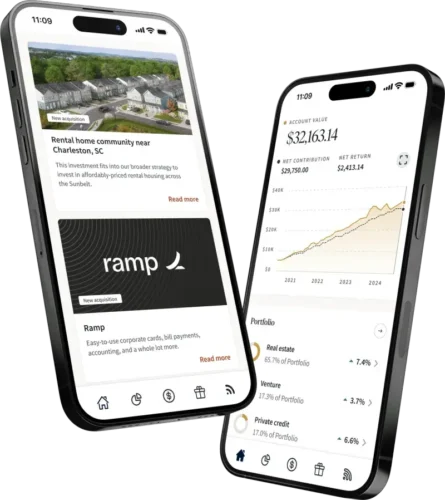 Getting started with Fundrise is fairly straightforward, allowing you to open an account, choose a portfolio strategy, and complete your first investment in less than five minutes.
The minimum starting point can be as low as $10, which makes the platform unusually accessible for private-market investing.
Once you fund the account, Fundrise allocates your money according to the strategy you selected.
From there, the platform can continue adding new assets to your portfolio over time – without any additional investment from you.
That part stood out to me because you are not left managing individual properties or private deals on your own.
It’s also possible to make additional manual contributions or set up recurring investments if that’s more your style.
In practice, the experience feels much closer to using an automated investment platform than managing private investments one by one.
Choosing a Portfolio Strategy
 Fundrise gives you different ways to shape your exposure depending on what you want from the account.
Someone focused on long-term growth may lean more heavily toward real estate or venture opportunities, while an individual looking for income may find private credit more interesting.
I like that the platform doesn’t force every member into the same mix.
The three main asset classes behave differently, so you can build around your goals instead of relying on a single type of investment.
Recurring Investments and Portfolio Management
Fundrise also makes ongoing investing relatively easy.
Recurring contributions let you keep adding capital without logging in every month to decide where to put it.
The web and mobile platforms also let you monitor your portfolios and make account adjustments from just about anywhere.
I love that convenience because the whole point of Fundrise is to make private-market investing feel less complicated than it traditionally has been.
>> Build Wealth With Fundrise <<
Fundrise Investments: Real Estate, Private Credit, and Venture Capital
Fundrise originally made its name through real estate, but the platform has expanded well beyond that.
Today, members can gain exposure to private real estate, private credit, and venture capital, giving Fundrise a much broader mix of assets than many people probably expect.
Fundrise Real Estate
 Real estate is still the core of the platform, where Fundrise’s portfolio includes more than 20,000 residential units, along with e-commerce-focused industrial properties.
The company has also invested in build-for-rent housing across the Sunbelt, last-mile distribution warehouses, industrial assets, and data centers.
The scale is significant too.
Fundrise deployed more than $1 billion of capital annually in both 2021 and 2022, placing it among the 50 largest real estate private-equity investors in the world by annual deployment.
That is difficult for anyone to replicate on their own.
Instead of tying a large amount of capital to one rental property, you’ll have exposure to a much wider pool of professionally managed assets.
Fundrise Private Credit
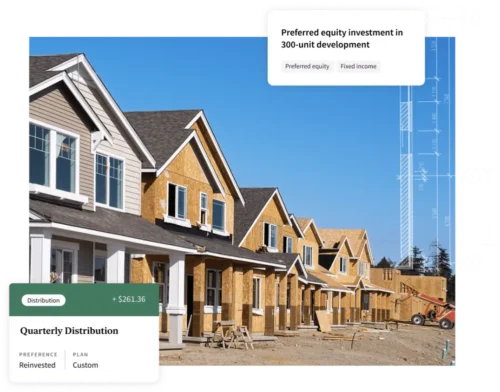 Private credit adds a different source of potential income.
Rather than owning equity in a property, private-credit strategies involve lending money and earning interest from those loans.
Fundrise specifically highlights high-yield opportunistic bridge-loan financing as one area it targets.
I see this as a useful complement to real estate because the return drivers are different.
Property values and rents can contribute to real estate performance, while private credit is more dependent on loan income and borrower repayment.
That does not make it risk-free, but it gives members another way to diversify within the same platform.
Fundrise Venture Capital
Venture capital is probably the biggest departure from Fundrise’s real estate roots.
The platform now provides exposure to late-stage, high-growth private technology companies, including businesses working in areas such as artificial intelligence and machine learning.
Fundrise also highlights modern data infrastructure and fintech through its venture strategy.
That gives the platform a growth component that behaves very differently from real estate or private credit.
This is one of the more interesting parts of the current Fundrise model for me, since you’re not limited to one corner of the private markets anymore.
>> Access Fundrise Real Estate Opportunities <<
Fundrise Account Types: Taxable Accounts, Traditional IRAs, and Roth IRAs
Fundrise offers several ways to hold investments, which makes the platform easier to fit into different financial plans.
The most straightforward route is a personal investment account, which functions as a standard taxable account where you can build a portfolio of alternative investments.
Fundrise also allows eligible members to roll over an existing retirement account or open a new Traditional IRA or Roth IRA.
These accounts use third-party custodians separate from Fundrise to handle retirement-account administration.
There is also an option for people who prefer professional guidance, as registered investment advisers can access Fundrise and invest on behalf of their clients.
Whether you want a taxable account, retirement exposure, or adviser-managed access, there is a path available.
>> Discover Fundrise Private Credit Today <<
 What Makes Fundrise Different?

Two key areas really jumped out at me when using Fundrise:
Proprietary Systems
What separates Fundrise from many alternative-investment platforms is how much of the infrastructure it has built itself.
The company has spent more than a decade replacing older investment-industry processes built around spreadsheets, PDFs, and third-party vendors with its own integrated technology.
That technology works behind the scenes, and each feature plays a big role in how the overall system operates.
Cornice handles functions such as fund administration, transaction management, and tax reporting.
Basis provides real-time asset data and automated reporting across hundreds of properties, while Equitize supports Fundrise’s growth-equity operations.
Then there is RealAI, which uses more than 3 trillion data points to generate real estate insights.
Most folks will never interact directly with these systems, but they help explain how Fundrise can manage a large number of accounts and assets through one platform.
A Direct Access Model
Fundrise lets members invest through its own platform without relying on traditional brokers or other intermediaries.
Funds open to everyday investors also avoid the usual promotion or carried-interest performance fee that is common in many private-market deals.
That combination of technology, scale, and direct access is really the foundation of the Fundrise approach.
>> Explore Fundrise Venture Capital Access <<
Is Fundrise Legit?
Fundrise has been operating since 2012, so this is not a new platform trying to prove its concept.
The company is headquartered in Washington, D.C., and co-founder Ben Miller remains CEO.
More than 385,000 active investors utilize the platform with over $2.87 billion in equity managed.
Users have earned more than $361 million in net dividends.
It has invested more than $7 billion in real estate projects since launching its first offering.
Fundrise also manages publicly registered ’40 Act funds and SEC-qualified Regulation A funds, which the company provides publicly audited financial statements each year.
No private-market platform can eliminate investment risk, but Fundrise has the operating history, scale, reporting structure, and regulatory framework I would expect from an established service.
>> Join Fundrise For Private Market Exposure <<
 Fundrise Liquidity, Redemptions, and Withdrawal Rules

Fundrise does not offer a standard money-back guarantee, which makes sense for an investment platform rather than a subscription service.
Investments instead have applicable liquidation/redemption terms, and some Regulation A or Regulation D funds may carry redemption penalties
We reviewed Fundrise’s platform, investment options, fees, access, and liquidity, and these are the strongest pros and cons that stood out.Fundrise Pros and Cons
Pros
Cons
>> Start Your Fundrise Portfolio Today <<
Fundrise Fees and Minimum Investment: How Much Does It Cost?
$1,000 for IRAs or $99/year
Fundrise does not charge a subscription fee for its standard investment plans.
Instead, the main cost comes from an annual 0.15% advisory fee, plus a 0.85% management fee on its real estate funds.
That works out to about $10 per year for every $1,000 invested in a typical real estate allocation.
There are three core plans to choose from.
Supplemental Income focuses on investments designed to generate regular quarterly dividends, while Long-Term Growth leans toward assets with greater appreciation potential.
Balanced Investing combines both approaches for members who want a mix of income and long-term growth.
Fundrise also allows custom allocations for people who want more control over their portfolio mix.
The entry point remains very low. A taxable account can start with just $10, while IRAs currently require a $1,000 minimum investment.
Venture-focused investments use a different fee structure.
Fundrise lists a 1.85% annual management fee for its Innovation Fund, equal to $18.50 per year for every $1,000 invested.
Fundrise also offers Fundrise Pro, which adds custom portfolio tools and access to selected Wall Street Journal Pro content.
The latest official pricing I found lists Pro at $10 per month or $99 per year, with a 30-day free trial for new members.
I like that Fundrise gives you several ways to invest without locking basic access behind a paid membership.
The real value comes from choosing the strategy that matches your goal, whether that is income, appreciation, or a balance of both.
Here’s a stronger version that uses Fundrise’s official historical return data and keeps the same review-style narrative rather than turning into a dry performance table.
>> Access Ben Miller’s Fundrise Platform <<
Fundrise Track Record and Past Performance
Fundrise has built a long enough track record to show both strong years and tougher ones, which I actually like seeing in a private-market platform.
Its advisory client returns came in at 22.99% in 2021, 1.50% in 2022, -7.45% in 2023, 5.75% in 2024, and 6.24% in 2025.
Looking more fund-specific, the Flagship Real Estate Fund has a 3.6% annualized return since inception.
The Income Fund is faring a bit better at 8.1%, and its Innovation fund sits at 19.45%.
Fundrise has also generated more than $361 million in net dividends for its users over the years.
Those numbers show that returns can move around from year to year, so I would view Fundrise as a long-term diversification play rather than expect consistent annual gains.
>> Explore Fundrise Real Estate Investing <<
Is Fundrise Worth It?
After working through this Fundrise review, I think it makes the most sense for folks who want easier access to private-market assets without taking on the work of managing deals themselves.
Real estate is still the main draw, but the addition of private credit and venture capital gives the platform a much broader role in a diversified portfolio.
What I like most is the combination of low entry costs, professional management, and access to assets that can be difficult to reach on your own.
The main limitation is liquidity, so I would treat Fundrise as a long-term alternative investment rather than money you may need quickly.
For the right person, that tradeoff feels reasonable, especially if the goal is steady exposure to private markets without adding more complexity.
How Fundrise’s Private Real Estate, Private Credit, and Venture Investing Actually Work
How does Fundrise let you invest in private real estate without buying or managing properties yourself?
Instead of purchasing a rental property directly, you invest through Fundrise’s professionally managed funds. Fundrise sources, acquires, finances, and manages the underlying assets, which include 20,000+ residential units as well as build-for-rent communities, industrial properties, warehouses, and data centers. Your returns can come from income generated by the investments and changes in their value, while Fundrise handles the operational work that would normally fall on a direct property owner.
How do Fundrise’s real estate, private credit, and venture capital investments work together?
Each asset class serves a different role. Real estate can generate income and long-term appreciation, while private credit earns interest by lending capital, including through opportunistic bridge loans. Venture capital adds higher-growth exposure to late-stage private technology businesses in areas such as AI and data infrastructure. Fundrise brings these opportunities into one account, allowing investors to choose strategies based on income, long-term growth, or a combination of the two rather than relying entirely on one private-market asset class.
How do Fundrise’s fees, returns, and liquidity affect the long-term investment case?
A typical Fundrise real estate allocation carries a 0.15% annual advisory fee and 0.85% management fee, or about $10 annually per $1,000 invested. The tradeoff is that private assets are less liquid than publicly traded securities: redemption terms vary and certain funds may impose penalties. Historical results have also fluctuated — advisory client returns ranged from 22.99% in 2021 to -7.45% in 2023 before returning to positive results in 2024 and 2025. That combination makes Fundrise better suited to capital that can remain invested for the long term rather than money you may need on short notice.



 Tags:
Tags: