

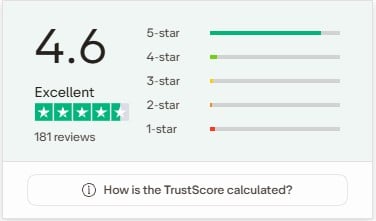
What Real Users Say
Edgeful holds an excellent 4.6/5 rating on Trustpilot, based on 180+ customer reviews, reflecting real-world user sentiment. Verified buyers frequently highlight:
- I have only been using Edgeful for close to a week now, but WOW! The amount of data available saves so, so much time. I don’t have the algo subscription but if that is not in your plan, then the regular subscription is awesome.
- OMG. Where has the real DATA been all of my life. I can’t believe nobody thought of this until recent years. Marketers are gunna market. You can’t expect anything else. But edgeful shows me the real landscape. SOOOO grateful to edgeful.
- Edgeful is an absolute game changer. If your trades are not backed by data they are essentially gambles. Edgeful allows you make data backed decisions to maximize the probability of your trade being profitable.
Notably, negative feedback is minimal across customer reviews.
Overall, Edgeful is one of the highest-rated tools in its category on Trustpilot, with traders consistently praising its depth of market data and the edge it provides for making informed, probability-driven decisions.
If you’re like me, you’re always on the hunt for clear market data that can help shape a trade without letting emotion take over.
That search led me to Edgeful, a browser-based platform built around historical probabilities, live market context, and repeatable intraday patterns.
The platform’s newest update introduces some cool new features along with Edgeful AI, but how does it stack up against the competition?
In this updated Edgeful review, I took a fresh look at the platform, its AI tools, API access, reports, automation features, pricing, and overall workflow to see whether this personal quant is still worth your attention.
>> Try André Arslanian’s Edgeful Today <<
What Is Edgeful?
Edgeful combines more than 150 statistical reports, Edgeful AI, real-time market tools, and API access into one research platform. Its probability-based workflow helps traders replace guesswork with structured historical analysis while remaining competitively priced for serious active market participants. Edgeful AI analyzes proprietary historical market data—not just general market knowledge—and can compare up to three reports simultaneously to uncover statistical relationships. Combined with the new Edgeful API, it offers institutional-style research capabilities without requiring users to build their own quantitative infrastructure. Edgeful is designed for traders who want to build a repeatable research process rather than receive simple buy and sell alerts. Its extensive feature set rewards users willing to invest time in learning the platform and developing their own playbook.
Edgeful is a browser-based market analytics platform created to pull clarity from the noise.
It acts as a personal quant that organizes historical market behavior into clean probabilities you can use when preparing for or monitoring a live session.
The platform covers stocks, futures, forex, and crypto. Most of its tools feel geared around a simple question: how has price behaved when a familiar setup appeared under similar conditions?
To capture that answer, Edgeful includes more than 150 reports, with filters and subreports that let you narrow data by ticker, session, weekday, lookback period, report variation, and market condition.
Research extends beyond static reports to real-time dashboards, What’s In Play, a multi-market screener, TradingView indicators, Edgeful AI, API access, and an automation layer that can connect statistical rules to trade execution through supported broker integrations.
Data alone cannot remove risk, but Edgeful does a strong job of turning raw numbers into a structured workflow. That remains the platform’s clearest advantage.
Who Is André Arslanian?
André Arslanian is the founder and public face of Edgeful.
His work centers on transforming market behavior into practical statistical tools that users can apply without needing to build a quantitative research stack from scratch.
While I wasn’t able to track down a ton of info on his background, André did spend time at Goldman Sachs before taking on Edgeful.
Arslanian stays visible through the platform’s walkthroughs, educational content, community discussions, and product updates.
Being active tells me he’s invested, where most platforms of this caliber don’t even share who their CEO is.
Is André Arslanian Legit?
From what I can tell, Arslanian is a credible dude.
He’s very active on social media and has a presence, even if it’s not the largest one I’ve ever seen.
Again, the fact that he doesn’t hide behind his platform is a big plus. There’s credibility here because the platform is built around visible methodology rather than personality-driven predictions.
Edgeful explains where its data comes from, how it structures reports, and what its tools can and cannot do.
>> Unlock Edgeful’s Trading Edge Here <<
How Does Edgeful Work?
How Edgeful Turns Raw Market Data Into Actionable Probabilities
Edgeful works by turning raw market data into probabilities that are easier to use during preparation and live decision-making.
Instead of relying on intuition alone, you can see how often patterns such as gap fills, opening range breakouts, initial balance breaks, and prior day range interactions have played out across a chosen market and lookback period.
The platform organizes those tendencies into structured reports.
Each one gives you a repeatable definition, historical outcomes, and filters that help separate broad averages from the conditions you actually care about.
I found this much more useful than working with a generic stat. A gap fill rate across every day in a dataset may not tell me much.
On the flip side, a gap fill rate for a specific ticker, session, weekday, and gap size can become far more relevant.
Your Daily Workflow Revolves Around Clear Market Bias
Once you understand the historical tendencies, Edgeful helps you form a daily bias with less friction.
I can select the instruments I follow, open the reports tied to my playbook, and get a structured read on whether the session favors strength, weakness, continuation, reversal, or uncertainty.
The important distinction is that Edgeful combines historical context with live platform tools.
The historical report tells you what has happened in comparable situations. What’s In Play and the screener help show which conditions are developing now.
That separation keeps the workflow grounded. You are not treating the past as a promise, but using it as context while the current session unfolds.
Live Market Tools Keep You Focused in Real Time
As the session develops, Edgeful tracks the market and highlights when your preferred setups begin forming.
Because the platform is customizable, you can focus on the tickers, reports, and market structures that fit your approach.
I like that better than receiving a constant stream of broad alerts with no connection to my playbook.
There have been plenty of times when I would not have found a developing setup on my own in a sea of content.
Having relevant conditions in one place cuts down the time spent cycling through charts and makes it easier to stay patient when the data does not support a clear move.
The Platform Helps You Build a Consistent Strategy Over Time
Over time, the platform starts shaping a strategy around your strengths.
You learn which setups fit your style, which sessions produce cleaner follow-through, and where your assumptions tend to break down.
Edgeful can also support a more systematic workflow.
Saved reports become a playbook, the screener tracks conditions across markets, and the algorithm tools can automate defined rules once you are comfortable with the logic.
Broker connections make it possible to carry those rules into execution, although I would not rush into automation before testing the underlying setup and setting realistic risk limits.
The platform is at its best when you treat it as a process. Research comes first, live context comes next, and automation only follows once the rules are clear.
>> Explore Edgeful’s Full Platform Access <<
How to Get Started with Edgeful
I was hesitant when I first logged into Edgeful because platforms with this much data can become overwhelming fast.
Fortunately, the dashboard proved easier to understand than I expected.
After creating an account, you can choose the markets you want to follow, whether that is futures, stocks, forex, or crypto.
From there, the best move is to investigate a few reports that match setups you already understand.
Trying to master all 150-plus reports at once would defeat the purpose. Start with familiar structures, build a small watchlist, and use the reports to see how the probability engine frames those conditions.
It only takes a session or two to understand how the reports can shape a daily bias.
You can then save the most useful ones to your playbook, check them before they open, and monitor the live tools as the day develops.
Only once the basic routine feels natural should you can explore the deeper features.
>> Get Started With Edgeful Essential <<
Edgeful Core Features: Everything the Platform Includes
Here are the tools that stood out most during my updated Edgeful review.
Statistical Reports and Playbooks
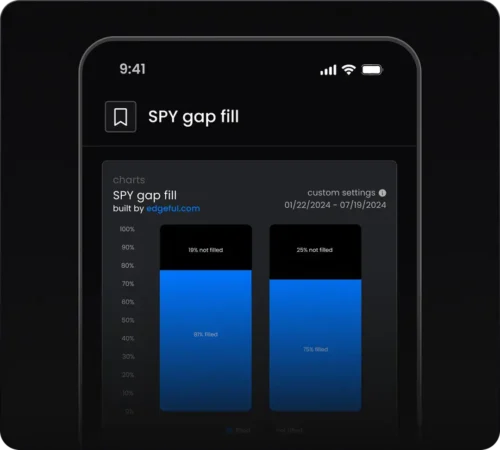
Edgeful’s statistical reports remain the backbone of the platform, providing a data-backed view of how markets have behaved around gap fills, opening range breakouts, initial balance levels, prior day ranges, fair value gaps, volatility zones, candle patterns, and more.
The library now includes more than 150 reports, along with filters and subreports that can narrow results by ticker, session, weekday, gap size, retracement, spike size, target, and other conditions.
Any useful report can become part of a saved playbook. That simple step turns a large research library into a focused daily checklist.
A Dedicated What’s In Play Tab
What’s In Play gives you a real-time view of conditions forming across the market. It connects live movement to the same report logic used elsewhere on the platform.
The tab tracks key levels, current behavior, and developing setups as the session unfolds.
Think of it as a bridge between preparation and execution because it shows whether the patterns you’re researching are actually becoming relevant.
The feature does not replace judgment, but it helps keep attention on conditions that have a reason to matter.
Real-Time Screener
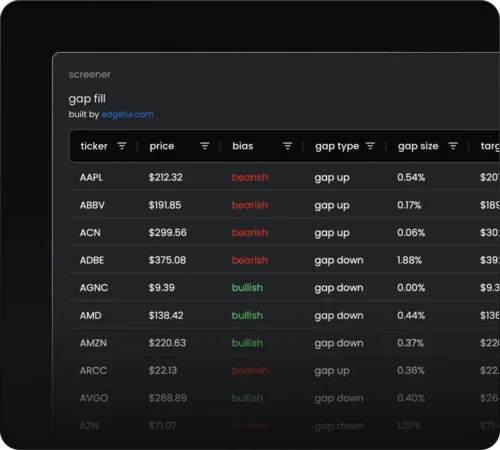
The screener helps track active conditions across many instruments at once. It can highlight when several criteria align and make it easier to compare markets without opening a wall of charts.
This is especially helpful when a watchlist includes several futures contracts, stocks, currency pairs, or crypto assets.
Instead of treating every move as equally important, you can narrow the field to instruments showing the clearest statistical setup.
I like the screener most as a focus tool. It does not need to predict the next move to provide value – reducing noise goes a long way.
TradingView and NinjaTrader Indicator Library
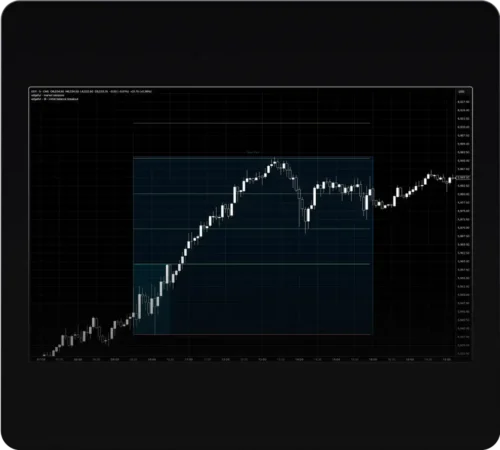
Edgeful includes a broad indicator library for TradingView, with platform support also extending into NinjaTrader for relevant workflows.
The indicators plot structures such as gaps, opening ranges, previous day levels, fair value gaps, volatility zones, and other intraday reference points using definitions that match the platform’s reports.
I like this, because a report loses value when the chart uses a different rule for the same setup. Edgeful’s indicator layer helps keep the research, charting, and execution framework aligned.
Custom-Built Reports

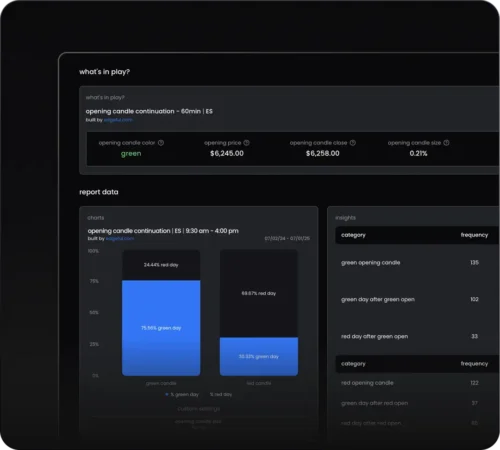
Edgeful’s team can develop new reports and report variations when members identify a setup that deserves deeper study.
That option is useful for people who already have a clear idea but lack the data infrastructure to test it.
A custom report can turn a subjective observation into something repeatable and measurable.
Availability may depend on the request and product roadmap, so I would not treat custom development as an instant on-demand service.
Still, the feedback loop between active members and the research platform gives Edgeful room to keep improving.
Mentorship Calls and Live Sessions
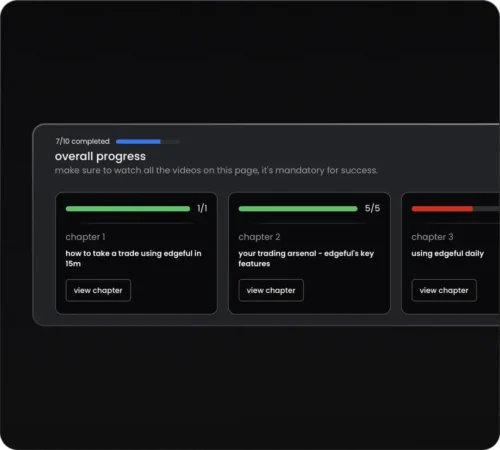 Edgeful hosts mentorship calls, walkthroughs, and educational sessions that explain how the reports work in real market conditions.
These sessions often cover market structure, statistical tendencies, platform workflows, and the discipline needed to follow a rules-based process.
I appreciate the practical tone. Some questions need more context than a help article can provide, and live instruction gives a place to connect the numbers to an actual routine.
Free Newsletter, Courses, and Risk Tools
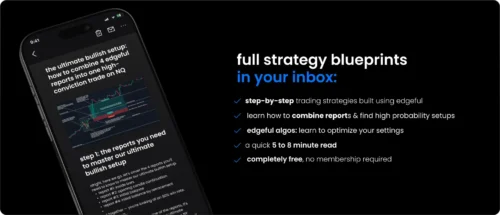 Edgeful also maintains a useful educational layer outside its core subscription.
The Stay Sharp newsletter shares market tendencies, research ideas, and strategy lessons.
Free playbooks, YouTube content, a futures course, TradingView indicators, and a community give prospective members a way to understand the company’s approach before paying.
The risk calculator deserves attention too. It helps frame position size, drawdowns, and the effect of risk percentages over time.
Edgeful Algos and Broker Connections
 Edgeful Algos come into play when you want to automate rule-based strategies using the same logic that powers the statistical reports.
Supported workflows can connect defined setups, broker access, risk parameters, and automated execution. Current materials reference eight automated strategies, broker connectivity, algorithm templates, and an Algo Analyzer under the All Access tier.
I would not look at this as a day-one feature. It became more compelling after the research process made sense, since automation will repeat a process whether it’s good or bad.
>> Automate Your Strategy With Edgeful Algos <<
Edgeful AI: The Biggest 2026 Upgrade
Edgeful AI launched on February 28, 2026, as a dedicated research assistant built around Edgeful’s proprietary reports and historical market statistics.
It effectively takes research to the next level, allowing you to engage with data in a more practical way.
You can ask questions about setups that don’t make sense and combine reports AI gives you all in the same breath.
This is a time saver for sure, but its powerful internal mechanism analyzes more data in less time than you could ever hope to manage on your own.
The big bonus is that the original version acted more like a product expert. It could explain reports, indicators, documentation, and platform features.
Version 1 introduced direct access to report data, which changed the feature from a support assistant into a research tool.
Cross-Report Analysis
Edgeful AI can stack up to three reports in one analysis, opening the door to combinations that would take far longer to study manually.
You might compare initial balance, gap fill, and opening range breakout data to see whether certain conditions tend to appear together.
Another query could test whether a setup behaves differently by weekday or session.
Through that, AI can help search for relationships across structured datasets without forcing you to export and merge every table yourself.
This is where the product starts to feel like a personal quant, giving non-technical users a practical way to ask multi-layered research questions in plain English.
Find Commonalities
One of the most interesting prompt patterns is Find Commonalities.
The AI scans the loaded report data and looks for shared characteristics among successful or unsuccessful setups.
Those traits could involve session, weekday, market condition, target behavior, or another field included in the report tables.
This action would prove too tedious without AI, allowing you a starting point for deeper research.
Ultimately, the feature can surface questions I would not have thought to ask. That makes it useful as an idea generator as well as an analysis tool.
Edgeful API: Built for Custom Workflows
The Edgeful API is the other major addition to the platform, providing programmatic access to the proprietary report data that powers Edgeful.
Developers and advanced users can then retrieve structured market statistics without scraping the website.
The API can support custom dashboards, AI-powered journals, trade grading tools, side-by-side ticker comparisons, confluence research, backtests, bots, and performance analytics.
Edgeful also promotes integrations with tools such as Claude, Claude Code, Cursor, ChatGPT, and custom AI agents.
You can let your AI build dashboards, create bots, run backtests, and pretty much anything else you can think of.
The sky feels like the limit here, but there are some limitations that factor in the different pricing models that I’ll cover in a bit.
How Edgeful AI and the API Fit Together
Edgeful AI and the Edgeful API solve different problems.
The AI is the easier in-platform research assistant. It lets members load report tables, ask questions, compare up to three reports, and explore historical relationships without writing code.
The API is the build layer. It gives developers, advanced researchers, and automation-focused users access to structured data for their own tools.
In a nutshell, Edgeful AI makes the company’s data more accessible. The API makes it more portable.
>> Explore Edgeful AI and API Access <<
Education and Community
Edgeful’s educational content helps bridge the gap between seeing a probability and knowing how to use it responsibly.
The Stay Sharp blog and newsletter explain market tendencies through the same data-first lens as the platform. Video tutorials cover report analysis, merged tables, prompts, and cross-report workflows.
A great place to start is the introductory futures course, which adds context around contracts, leverage, volatility, and common intraday structures.
The Discord community remains active, with members sharing setups, playbook ideas, and interpretations of daily conditions.

New users can learn a lot by watching how experienced members connect reports to a broader plan, although I would never copy someone else’s setup without understanding it.
>> Join André Arslanian’s Edgeful Community <<

Edgeful Refund Policy: Payments Are Final — No Refunds Issued
Edgeful keeps its refund terms straightforward, and you should understand them before subscribing.
Payments are final once a monthly or annual charge has been processed. Subscriptions renew automatically, and you’ll need to cancel before the next billing date to avoid another charge.
After cancellation, access generally remains active through the paid subscription period.
A strict no-refund policy is common for platforms that provide immediate digital access, but it places more responsibility on the customer. Review the plan carefully and start with the tier that matches how you actually expect to use the service.
>> Claim Your Edgeful Membership <<
Check out the top pros and cons I came up with during my review:Pros and Cons
Pros
Cons
How Edgeful Compares to TradingView, TrendSpider, and Bookmap
Edgeful vs. TradingView
TradingView remains one of the strongest charting platforms available. It excels at technical analysis, community scripts, alerts, and multi-asset charting.
What it does not provide by default is Edgeful’s structured statistical library. TradingView can show a gap, opening range, or prior day level, but Edgeful can show how comparable conditions behaved historically and help organize those probabilities into a playbook.
I see the two services as complements. TradingView handles flexible charting. Edgeful adds a deeper probability and research layer.
Edgeful vs. TrendSpider
TrendSpider focuses on automated charting, pattern recognition, smart trendlines, and multi-timeframe scanning.
Edgeful takes a different path. Its core question is not simply whether a pattern exists. It asks how often that pattern behaved a certain way under comparable conditions.
TrendSpider may fit people who want visual automation and broad technical scanning. Edgeful feels stronger for users who prefer quantified session tendencies, report filters, and a repeatable bias-building process.
Edgeful vs. Bookmap
Bookmap is built around order flow, liquidity, heatmaps, and market microstructure.
Edgeful provides a broader statistical context. It can help frame whether a gap, range break, or session condition has historically favored continuation or reversal before you zoom into execution.
A user could rely on Edgeful to prepare the session and Bookmap to refine entries. Edgeful frames the day. The bookmap shows the movement inside it.
 How Much Does Edgeful Cost?
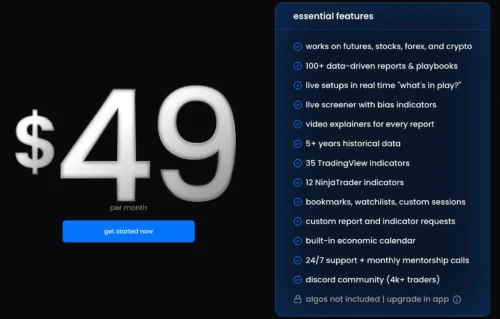
Edgeful currently offers three primary paid tiers, with lower effective monthly rates for annual billing.
The Essential plan costs $49 per month or $399 per year, which works out to about $33 per month.
It includes the data platform, more than 150 reports, What’s In Play, the screener, Edgeful AI, more than 50 TradingView indicators, and Discord access.
API Pro costs $99 per month or $799 per year, equal to about $67 per month when billed annually.
This is more for developers and advanced users who want all API reports, all tickers, one year of historical data, AI integrations, and live API endpoints.
All Access (Algos) costs $299 per month or $2,399 per year, equal to about $199 per month on annual billing.
It includes the Essential platform plus automated strategies, broker connectivity, algorithm templates, the Algo Analyzer, deeper historical API access, and row-level daily data.
>> Activate Your Edgeful Membership Today <<
Who Is Edgeful Best For?
Edgeful works best for folks who want a structured, probability-driven workflow built around repeatable market setups.
Discretionary traders can use the reports, screener, and What’s In Play to prepare and monitor a session.
Systematic users can build playbooks and study filtered conditions. Research-focused members can use Edgeful AI to compare reports and search for common traits.
Developers and advanced users now have a clearer reason to consider the platform because the API can feed custom dashboards, AI agents, journals, backtests, and analytics.
The platform remains especially appealing for futures users, but its coverage of stocks, forex, and crypto makes it broader than a single-market tool.
Edgeful is less suitable for someone seeking long-term stock recommendations, hands-off signals, or guaranteed outcomes. It expects the user to interpret data, manage risk, and build a process.
Edgeful Track Record and Past Performance
Edgeful is not a conventional stock-picking newsletter, so it does not have a simple model portfolio track record that can be judged against an index.
The platform sells data, reports, research tools, and automation infrastructure.
Results depend on which markets a member follows, which reports they use, how they define entries and exits, and how they manage risk.
Historical probabilities can reveal useful tendencies, but they do not guarantee that a setup will work in the future.
The same caution applies to patterns found by Edgeful AI and strategies tested through the API.
I see the platform’s real track record in the depth of the research environment, the consistency of its report definitions, and the company’s willingness to state the limits of historical analysis.
That is not the same as audited performance, but it is a more honest standard for this type of product.

Is Edgeful Worth It?
Edgeful is worth considering if you have reached the point where you want more structure and less guesswork in your market decisions.
The platform’s strength comes from the way its tools fit together, from reports to playbooks and screeners.Edgeful AI is the most meaningful recent upgrade because it gives you a practical way to question the report data in simple language.
The ability to compare up to three reports, search for common traits, and investigate historical setups makes the research library easier to use.
The API expands the product in a different direction. It will not matter to everyone, but it makes Edgeful far more attractive to developers, quantitative researchers, and users building custom AI workflows.
None of this removes risk from trading, but it can serve as an amazing supplemental tool to your own research.For most people, the Essential plan offers the strongest balance of depth and cost, but you’ll have to weigh if you need anything more.After revisiting the entire platform, my verdict is positive.
Edgeful has grown from a strong statistical dashboard into a broader research ecosystem without abandoning the evidence-first approach that made it useful in the first place.
Edgeful FAQs
Does Edgeful work for all markets?
Edgeful supports futures, stocks, forex, and crypto. Available tickers, reports, and historical depth can vary by feature and subscription tier.
Do I need TradingView or NinjaTrader to use Edgeful?
No. The core platform runs in a browser. TradingView, NinjaTrader, and broker connections are optional extensions for charting or automation.
What is Edgeful AI?
Edgeful AI is an in-platform research assistant that can analyze Edgeful’s proprietary historical report data, compare up to three reports, and help identify patterns or common characteristics.
Can Edgeful AI tell me what to trade today?
No. Edgeful AI is a historical research tool, not a live signal service. What’s In Play and the screener are better suited to current market conditions.
What is the Edgeful API?
The Edgeful API provides programmatic access to structured report data, historical statistics, calculations, and selected live endpoints for custom dashboards, AI agents, journals, analytics, and automation.
Can Edgeful guarantee profitable results?
No. Edgeful provides historical probabilities, research tools, and execution infrastructure. Outcomes still depend on strategy quality, discipline, risk management, and changing market conditions.
Is there a refund if I cancel?
The current policy states that payments are final. Access generally continues through the paid billing period after cancellation.



 Tags:
Tags: