

Most people scanning for the next big move are still parked in the same AI names everyone else already owns.
Jack Kellogg’s TradeSignals has a different idea, and his Power Signal system is what makes it credible.
In this Jack Kellogg TradeSignals review, I dig into the PowerSignal alert service, the $8 trillion setup behind it, and whether following Jack’s signals is worth your time and money.
>> Join Jack Kellogg’s TradeSignals Today <<
What Is Jack Kellogg’s TradeSignals and How Does the PowerSignal System Work?
Jack Kellogg's TradeSignals gives subscribers a full year of proprietary PowerSignal alerts, including Standard, Stealth, and rare Super Signals, without paying the reported $6,000 annual cost of the underlying indicator. At just $49, it bundles alerts, training, and member resources into an accessible research service. TradeSignals is built around Jack Kellogg's proprietary PowerSignal methodology, designed to identify unusual buying activity before major price moves. Kellogg is also recognized as Tim Sykes’ top-performing student, with a publisher-reported $24M+ personal trading record highlighted throughout the presentation. TradeSignals is designed specifically for active traders seeking short-term momentum opportunities rather than long-term investing or passive portfolio management. Subscribers should expect a fast-moving alert service instead of a traditional investment newsletter.
Jack Kellogg’s TradeSignals is a research membership built around the main featured idea: The Power Signal.  This is Jack’s proprietary trading tool for detecting unusual buying activity, sudden volume spikes, and stocks that may be getting “supercharged” before a sharp move.
The service is not the same as full direct access to the PowerSignal Indicator, which the materials say costs $6,000 per year.
Instead, Jack monitors the tool himself and sends members the opportunities he finds.
What you get is a full year of PowerSignal alerts above 100, Stealth Signals hiding below 100, and rare Super Signals above 300, plus the TradeSignals Masterclass, a private area, and a 60-day trial.
At $49, that is a very different entry point.
>> Get Jack Kellogg’s PowerSignal Alerts <<
 Inside Jack Kellogg’s $8 Trillion Shock Presentation: Supercharged Stocks and the Rate Cut Catalyst
Jack’s main warning is blunt: not one Magnificent 7 stock is flashing on his system right now.
The presentation, co-hosted with trading veteran Tim Sykes, makes the case that the next explosive moves are coming from a group Jack calls Supercharged Stocks.
Tim brings serious credibility: 26 years of trading, CNBC and ABC appearances, and a fintech platform that has served over 115,000 people.
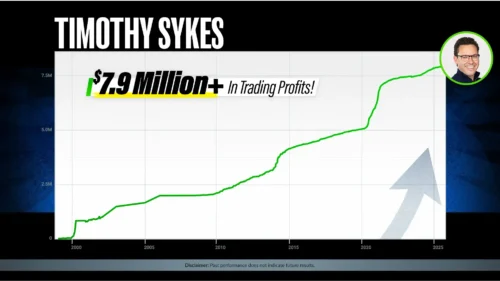 Jack is widely presented as Tim’s most successful student.
Why Chasing Nvidia, Palantir, and Quantum Stocks at Current Prices Could Backfire
Jack is not anti-AI. He is anti-late.
 NVIDIA, Palantir and quantum stocks have already made huge runs, which is why Jack argues chasing them at current prices could backfire.
By the time a stock is on every watchlist and every YouTube channel, the easy money has moved on.
Jack’s argument is that the next explosive moves will not come from the names everyone is already watching.
They will come from smaller stocks where unusual buying pressure shows up before the story is obvious to anyone.
>> Claim Jack Kellogg’s TradeSignals Access <<
How $8 Trillion in Money Market Funds Creates the Next Supercharged Stock Rotation
The “$8 trillion shock” comes from a record amount of money sitting in money market funds. Jack ties that cash pile to years of higher interest rates.
People parked it there because earning 4% to 5% with near-zero risk made sense.
With Trump pushing the Fed toward 1% and Morgan Stanley projecting four more rate cuts in 2026, that trade flips.
 A chunk of $8 trillion looking for better returns does not trickle into the market. It floods.
Morgan Stanley is projecting the S&P reaches 7,800 by year-end. The Power Signal is designed to catch that rotation early.
PowerSignal Readings Explained: Standard Signals, Stealth Signals, and Super Signals Above 300
The most useful part of Jack’s system is that it is not limited to one type of alert.
A reading over 100 is the main PowerSignal threshold, but Jack also talks about Stealth Signals that can appear below 100. MVST is the key example.
It only registered a 41, yet the tool detected a sudden spike of unusual buying activity at $0.50 before the stock reached a peak move of 107% in about 60 minutes.
Then there are Super Signals, which trigger when the Power Signal registers above 300.
Members can receive these opportunities during their 12-month membership.
Jack also uses BMR, ONMD, and CING to show how readings over 100 can appear during bad or volatile market days.
 BMR made a peak 118% move, ONMD made a peak 119% move, and CING moved from $4.80 to $20.83 for a peak one-day move of 333%.
This is the reason the service exists. Readers are not being asked to guess which small-cap stock might spike next.
They are paying to follow Jack’s research when his PowerSignal system spots unusual buying activity, Stealth Signals, or Super Signals.
The specific alerts come through Jack Kellogg’s TradeSignals, so anyone who wants access needs to subscribe before the next PowerSignal play reaches members.
Next, let’s break down what comes with Jack Kellogg’s TradeSignals.
>> Start With Jack Kellogg Today <<
What Comes With Jack Kellogg’s TradeSignals: Full Membership Breakdown
Jack Kellogg’s TradeSignals packages a full year of signal-based stock alerts with training, support, and private access.
The design makes sense to me: instead of giving everyone raw tool access they may not know how to use, Jack filters the signals himself and delivers only the setups worth acting on.
You get PowerSignal plays above 100, Stealth Signals below 100, Super Signal opportunities above 300, the TradeSignals Masterclass, U.S.-based support, and a private members-only website.
One clarification worth making: this is not the $6,000 full PowerSignal platform.
You are following Jack’s curated reads on the system, which is a very different product at a very different price.
ONE Full Year of Jack Kellogg’s TradeSignals
 The core membership gives you one full year of Jack Kellogg’s TradeSignals.
Jack watches The Power Signal every trading day for readings above 100, which usually appear around 3 p.m. ET.
Stealth Signals can fire any time during the morning or afternoon when a sudden volume spike hits.
Jack is not promising a specific trade count, but expects at least one new opportunity per week based on what he is already seeing.
The combination of standard signals, Stealth Signals, and rare Super Signals means the alert flow can show up at different times and in different forms across the year.
The Power Signal Alerts
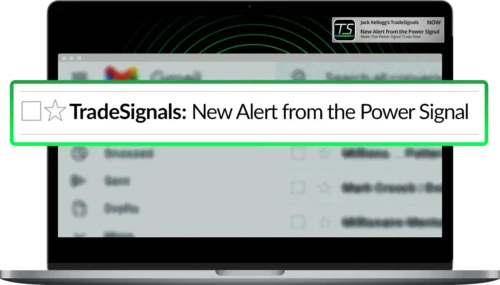 The Power Signal alerts are the main reason to join Jack Kellogg’s TradeSignals.
Jack’s system tracks extreme transaction volume across hedge funds, institutions, and Wall Street banks, then converts all of that into one number.
When the reading moves above 100, Jack treats it as a potential Supercharged Stock setup.
What I find compelling is something Jack and Tim make explicit: the Signal tracks what big money is doing, not what it is saying.
Remember Bill Ackman declaring “Hell is coming” on live television at almost the exact Covid crash bottom while privately doing the opposite?
His actual trades told a very different story. The Power Signal reads that actual behavior, not the public narrative.
>> Unlock Jack’s TradeSignals Research Now <<
“Super Signals” Trade Opportunities
Super Signals are the rare readings above 300 where the buying activity is so extreme that it sits in a category of its own.
The standout live example is XPON, where The Power Signal registered above 1,000.
That shows what the reading is meant to detect when the signal hits an extreme level, but it isn’t something members should expect to repeat.
Jack Kellogg’s TradeSignals Masterclass Video
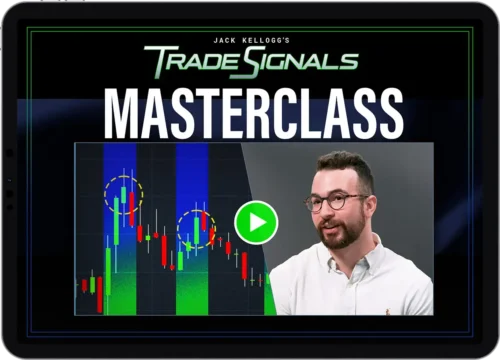 The Jack Kellogg’s TradeSignals Masterclass is the training piece of the membership.
Jack reveals the five signals he personally waits for before he clicks buy.
These are the triggers Jack says he relies on before entering any trade.
I like this feature because it gives you more than alerts. It helps explain what Jack wants to see before acting on a setup.
U.S.-Based Customer Support
 The membership includes U.S.-based customer support by phone or email Monday through Friday from 9 a.m. to 5 p.m. ET.
Support covers account access, billing, login issues, and refund requests.
It does not provide personal trading advice, which is standard for any research service.
Nobody from Jack’s team is going to tell you how much to put into a signal based on your account size. That part stays with you.
What support does is make sure the membership works the way it is supposed to, so the alerts get through, and you can access the materials without headaches.
Exclusive Members-Only Website
The members-only website gives you one place to access Jack’s urgent insights, updates, exclusive member features, bonuses, and service materials.
Fast-moving alert services live and die by how well the delivery works.
Email handles the alerts, but having a private hub means you can go back and review signals, check context, and stay organized when the pace picks up.
With PowerSignal alerts, Stealth Signals, Super Signals, and the Masterclass all living in one place, that structure makes the service cleaner to follow than scattered emails alone.
>> Get Jack’s Next PowerSignal Play <<
Jack Kellogg TradeSignals Refund Policy and 60-Day Trial Explained
 Jack Kellogg’s TradeSignals comes with a 60-Day Trial, which gives you the first two months to test the Power Signal opportunities Jack sends to subscribers.
If the service does not feel like a fit during that window, you can call member services and request a full refund.
For a fast-moving alert service, two months is enough time to see the signal types across different market conditions and know whether the pace and format work for how you trade.
>> Join TradeSignals Before The Next Alert <<
I reviewed Jack Kellogg’s TradeSignals closely, and these are the biggest pros and cons that stood out.Jack Kellogg TradeSignals Pros and Cons: PowerSignal Alert Service Reviewed
Pros
Cons
>> Follow Jack Kellogg’s Stock Alerts <<
Jack Kellogg’s TradeSignals Track Record and Past Performance
Jack’s record is the main reason this service gets my attention.
Jack’s personal trading record is heavily featured in the presentation, but these are his own results as a full-time trader, not results of TradeSignals members.
His Power Signal examples include HMBL at 75%, SINT at 198%, and RR at 225% in one day.
Past results do not guarantee future performance, and the service involves real trading risk.
All figures are publisher-reported peak moves after a signal, not average results or returns members actually captured. Small-cap momentum trading is high-risk, and individual results will vary widely.
How Much Does Jack Kellogg’s TradeSignals Cost?
Jack Kellogg’s TradeSignals currently has one available plan: Trade Signals Annual for $49.
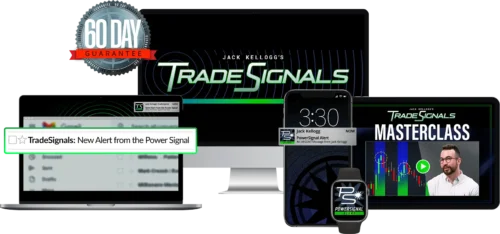
That gets you one full year of access, including Jack’s PowerSignal alerts, Stealth Signals, Super Signal opportunities, the TradeSignals Masterclass, U.S.-based customer support, and the exclusive members-only website, with the 60-day trial layered on top.
The stated retail price is $297, so the current $49 deal works out to more than 80% off.
The value looks stronger when compared with direct access to The Power Signal, which is listed as a premium-level option at $6,000 per year.
TradeSignals is not the full tool, but it lets you follow Jack’s curated Power Signal opportunities without paying that higher price.
>> Access Jack Kellogg’s TradeSignals Now <<
 Is Jack Kellogg’s TradeSignals Worth It?
Yes, with one condition: this service is built for fast-moving ideas, not slow buy-and-hold positions.
Jack Kellogg brings a well-known trading background, a system built with Tim Sykes’ fintech infrastructure, and a methodology rooted in tracking what big money is doing rather than what it says.
The Power Signal, Stealth Signals, and Super Signals each cover different windows in the market.
For $49 with a 60-day trial, the barrier to testing this is minimal.
If you can act on alerts quickly and handle fast-moving setups, Jack Kellogg’s TradeSignals is worth a look.