

Before I trust any financial newsletter, I want to know whether the person leading it has earned the right to make bold calls.
Jim Rickards has.
His career blends Wall Street, Washington policy, gold, crisis analysis, and national security finance in a way most newsletter editors cannot match.
Strategic Intelligence is not built around random stock ideas.
It is built around understanding the forces that move markets before most people notice them.
Who Is Jim Rickards?
 Jim Rickards is the editor of Strategic Intelligence, a macro-focused research service built around political, economic, and monetary shifts.
What makes him different from a standard stock picker is how he works.
Rickards does not start with charts or earnings reports.
He starts with gold, central banks, currencies, government policy, and global capital flows, then works outward to find the specific market opportunity hiding inside each shift.
I find that the top-down approach is genuinely more interesting than most newsletter frameworks because it explains why something is happening rather than just telling you what to buy.
Jim Rickards’ Wall Street Background
The clearest example of Rickards’ Wall Street credentials is the 1998 Long-Term Capital Management crisis.
When the hedge fund’s collapse threatened to detonate a $1.3 trillion hole in the global financial system, Rickards was inside the room negotiating the bailout with the Federal Reserve Bank of New York.
That is not a resume line.
That is lived experience of leverage, panic, institutional stress, and systemic risk at its worst.
When Rickards writes about financial contagion or hidden debt risk, he is drawing on something most market commentators have only ever read about.
I do not think that makes every forecast certain. No analyst has that kind of record. But it does make his warnings harder to ignore.
Jim Rickards’ Washington and Policy Experience
Rickards’ Washington background is just as important as his Wall Street experience.
He worked in the West Wing in 1974 and helped craft the Petrodollar Accord, one of the most consequential monetary agreements of the modern era.
He also helped end the Iran hostage crisis for the Reagan administration.
Since then, his career has run through the Pentagon and CIA, where he helped build systems to detect the next attack by analyzing unusual trading patterns.
Most market analysts observe Washington.
Rickards spent decades operating inside it.
Jim Rickards as a Monetary Expert
Rickards has built much of his reputation around money itself.
Gold, currencies, central banks, and government debt are not topics Rickards visits occasionally. They are the core of everything he writes.

His long-term gold target is $27,000 per ounce, which he connects to money supply, central bank reserve shifts, sovereign debt risk, and eroding confidence in paper currencies.
That is an aggressive number, and I would not treat it as guaranteed.
But the framework behind it is coherent.
Gold moves for reasons that confuse most market watchers.
Rickards explains those reasons in plain English, which makes him genuinely useful whether or not you share every one of his conclusions.
How Rickards Turns Big Themes Into Specific Ideas
This is where Rickards’ work gets interesting, and where I think he separates himself from most macro analysts.
Rickards’ real strength is turning large macro themes into specific market ideas.
His approach is not to say, “gold is going up, buy some.”
It ties the monetary thesis to a specific Washington policy decision, a specific Alaska resource he values near $1 trillion at current prices, and notes every $100 gold increase could add $16 billion to the deposit’s value.
He personally owns $1 million in physical gold and recommends at least a 10% portfolio allocation.
That skin-in-the-game detail matters to me.
Rickards is not selling a thesis he would not bet his own money on.
Jim Rickards’ Gold Expertise
Rickards has been publishing serious gold research since at least 2016, when he predicted gold would reach $10,000 in his bestselling book The New Case for Gold.
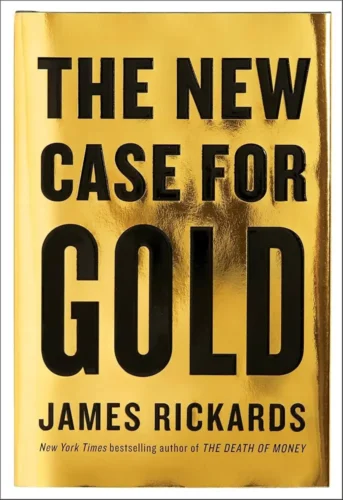 At the time, gold was around $1,200. He was early. He was not wrong.
His gold thinking operates across three layers simultaneously: gold as money, gold as a policy response, and gold as a supply story.
I like that he does not flatten these into one generic “buy gold” call.
Physical gold protects purchasing power.
Gold royalty stocks offer leverage with different risk characteristics.
Miners carry more volatility.
Rickards distinguishes between these rather than treating gold as a single undifferentiated asset.
Jim Rickards’ Track Record of Big Macro Calls
Rickards has built his reputation by making bold calls.
In 2008, he warned presidential campaign advisors that a second panic was coming in October.
Lehman collapsed three weeks later.
He predicted Trump’s 2016 win and delivered 40%, 47%, and 58% gains during the first term.
He called the 2024 victory to a 312-226 Electoral College edge, warned about Ukraine to the month, called Covid early, and after the 2024 election predicted a natural resource boom: gold jumped 66% and silver 87% in less than a year.
His work tends to feel urgent because he is not writing about small market noise. He is looking for major shifts.
If you want to understand those shifts before they reach the mainstream, that is a strong reason to follow him.
Is Jim Rickards Legit?
Yes, Jim Rickards is legit.
His credibility comes from several places at once. He has decades of capital markets experience.
Five decades in finance. West Wing experience from 1974. The LTCM bailout. Iran hostage crisis work for Reagan. CIA and Pentagon advisory roles. A $27,000 gold target with a framework behind it. A forecast record running from 2008 through a 312-226 Electoral College call in 2024.
He has a long-running focus on gold, currencies, debt, and monetary risk. He also has a history of making large macro calls that helped build his name.
That does not mean his research removes risk.
These should be treated as research-based projections, not promises.
Still, Rickards stands out in the financial newsletter world. Many editors can explain a chart.
Fewer can connect central banks, federal power, gold, geopolitics, and resource development into one clear thesis.
Rickards can.
Jim Rickards’ Strengths as a Newsletter Editor
Rickards’ biggest strength is making complex macro events easier to follow.
 Gold prices, currency pressure, federal decisions, resource policy, and global conflict can feel disconnected.
Rickards brings those pieces into one storyline, then explains why the connection matters for your money.
That is useful if you want research that goes deeper than headlines.
Another strength is his focus on hidden catalysts.
His Alaska gold thesis shows it well: most people would not connect a stalled resource project, a possible federal green light, rising gold prices, and a tiny stock into one opportunity.
Rickards does, and I think that specific, layered research style is exactly what makes Strategic Intelligence more interesting than the alternatives.
Who Is Jim Rickards Best For?
Jim Rickards is best if you want research that operates a few steps upstream from the headline.
His work fits people interested in gold, Washington policy, currency risk, hard assets, strategic resources, and geopolitical events.
It also works well for anyone readers who want ideas they can pursue through a regular brokerage account while still understanding the bigger thesis behind them.
He is not the best match for everyone.
If you only want day trades, options strategies, crypto-only ideas, or quick momentum calls, his style may feel too macro-focused.
That is not a weakness. It just means Rickards has a clear lane.
If you want to think a few steps ahead instead of chasing headlines, Strategic Intelligence makes a lot of sense.
 Final Take: Why Jim Rickards Adds Credibility to Strategic Intelligence
 Final Take: Why Jim Rickards Adds Credibility to Strategic Intelligence
Jim Rickards gives Strategic Intelligence its credibility because his background matches the service’s mission.
He brings Wall Street crisis experience, Washington policy exposure, monetary expertise, and deep gold research to a service built around macro trends and policy-driven opportunities.
The data points strengthen the case. His career reaches back five decades. He worked in the West Wing in 1974.
He helped navigate the 1998 LTCM crisis. He warned Congress about financial risk in 2007.
I would still keep expectations grounded. No analyst can guarantee the future, and small gold stocks carry real risk.
But if you want research that connects Washington policy, gold, global capital flows, and strategic resources into clear market ideas, Strategic Intelligence is worth a closer look.

 Tags:
Tags: