


Whenever I go through a financial research service, one of the first things I pay attention to is the person behind it all.
In my experience, editor credibility carries even more weight than recommendations because the strategy ultimately reflects the experience of the person building it.
After spending time reading The Oxford Communiqué and seeing how Alexander Green explains opportunities, I wanted to understand what kind of background supports his research approach.
Who Is Alexander Green?
 After spending time inside The Oxford Communiqué, Alexander Green comes across less like a typical newsletter personality and more like a career investment strategist.
His writing reflects someone who has spent years studying markets, evaluating businesses, and thinking about wealth building from a practical standpoint rather than simply reacting to headlines.
Before becoming a financial publisher, he spent about 16 years on Wall Street working as an investment advisor, research analyst, and portfolio manager before achieving financial independence.
That experience showcases why his research focuses heavily on fundamentals, patience, and portfolio thinking.
Today, he serves as Chief Investment Strategist at The Oxford Club, where he oversees research direction and writes The Oxford Communiqué.
Alexander Green’s Wall Street Background
With such a successful Wall Street background, it becomes clear why his research reads differently from that of many other newsletter editors.
His early career involved advising clients, managing portfolios, and analyzing companies.
That kind of work usually forces a focus on risk management and long-term outcomes rather than chasing excitement.
Experience That Shapes His Research Style
While reading his research, I noticed how often he emphasizes discipline and patience.
Plus, his writing consistently reflects a mindset built around protecting capital while positioning for growth.
That direction doesn’t surprise me, given that Green has managed real portfolios rather than simply commenting on markets.
How Wall Street Experience Shows Up Today
Green’s experience shows up in how he frames recommendations for each newsletter and report he writes.
Instead of focusing only on potential upside, he often explains the broader industry context and why the opportunity exists in the first place.
I honestly get the feeling from his writing that Green wants you to succeed in the same way he did, because I can’t think of any other reason why he keeps creating content.
The man is financially independent and wants to share the strategies that have worked (and failed) for him in the past, which is quite the impressive feat in my book.
His Role at The Oxford Club
 Today, Alexander Green operates as Chief Investment Strategist at The Oxford Club, where he plays a central role in shaping the research direction of the organization.
Leading Research Direction
Looking at more than just The Oxford Communiqué, it’s clear his role involves more than just writing one newsletter.
His work reflects leadership over research themes, investment philosophy, and the entire company presents its research to members.
His writing style also suggests editorial control. The consistency in tone, philosophy, and structure shows a clear research framework rather than disconnected ideas.
Editorial Influence on Publications
One thing I noticed while reading his work is how strongly the research reflects his personal investing philosophy.
The focus on long-term thinking, trend investing, and disciplined positioning shows a consistent editorial voice that can only come from Green himself.
Keeping the same overall tone indicates that Green is deeply involved in shaping the research rather than simply occasionally contributing ideas.
Alexander Green’s Investment Philosophy
After reading multiple issues of The Oxford Communiqué, Green’s investment philosophy becomes very clear.
The approach focuses on identifying long-term growth trends, finding companies that benefit from them, and allowing time for those opportunities to develop.
Long-Term Thinking Over Market Noise
One of the strongest themes I noticed is how little emphasis Alexander places on short-term volatility.
Instead of trying to predict market swings, his research focuses on how industries may evolve over several years.
That type of thinking naturally attracts readers interested in wealth building rather than chasing after a speculative play or the latest news story.
Growth Investing Approach
Green’s philosophy here also reflects a clear growth mindset.
Many of the companies he pursues are businesses expanding their market position, increasing relevance within their industries, or benefiting from technological change.
By finding where the opportunities are before mainstream news jumps in, you’re getting access to ground-floor breakouts with the longest runway for gains.
Trend-Based Investing
Another major pattern I’ve picked up on here is Green’s focus on large economic trends. Artificial intelligence, industrial growth, and infrastructure development are treated as long-term drivers rather than short-term stories.
This reinforces the idea that his strategy focuses on positioning around change rather than reacting to it, and seeing industries for what they really are.
Wealth Building Mindset
The writing also shows a strong emphasis on wealth building rather than trading.
Green’s tone consistently encourages patience, rational thinking, and allowing investments to compound.
Having that mindset shows me how Alexander wants to lead his followers into the same financial independence he experienced at age 43.
Books Written by Alexander Green
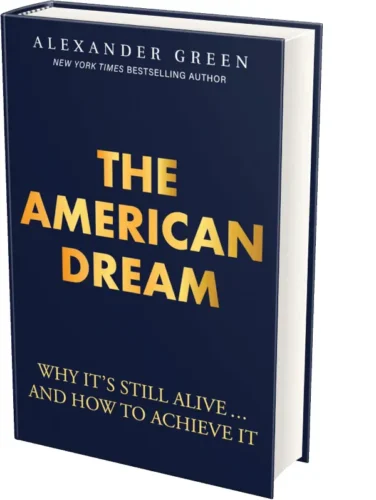
It’s not easy to get a book published if you don’t know what you’re talking about, making Green’s long history as an author yet another feather in his cap.
After all, writing multiple bestsellers requires structured thinking, which often reflects how someone approaches investing.
His books include The Gone Fishin’ Portfolio, Beyond Wealth, The Secret of Shelter Island, and The American Dream. These works focus on investment discipline, financial independence, and long-term wealth building.
Consistent Themes Across His Work
What stands out is how consistent the themes are between his books and his newsletter writing.
The same ideas about patience, diversification, and rational investing appear throughout his work.
From my perspective, that consistency strengthens credibility.
When someone’s philosophy remains stable across different formats, it suggests a genuine belief system rather than a gimmick to get you to buy.
Focus Beyond Just Money
Some of his books also discuss broader definitions of wealth, including life balance and financial independence.
I love that approach since it paints a long-term picture to give you a future you can actually enjoy instead of trying for short-term wins.
Alexander Green’s Credibility Signals
Beyond biography details, what really builds credibility is consistency over time.
After reviewing Green’s work, his credibility emerges from sustained research activity rather than bold claims.
Longevity as a Research Editor
One of the strongest signals for credibility I’ve seen is how long Green has remained a lead strategist at The Oxford Club.
Newsletter editors who remain in leadership roles for decades usually do so because they maintain a loyal readership.
Last time I checked, it’s hard to stay in a position if you can’t handle the task at hand.
Publishing Career Strength
His decades of writing investment research also reinforce his credibility. Maintaining a long-running newsletter requires continuously finding relevant ideas and keeping readers engaged.
Alexander Green goes back to the grindstone time and again to locate new opportunities to share with his readers, showing me that his outcomes are more than just luck.
Research Leadership
Since Green heads up multiple services without the Oxford Club’s illustrious umbrella, it’s clear that the publisher heavily relies on his insight.
As one of the senior gurus on the team, Alexander helps shape newer editors and services with his years of wisdom and methodologies.
Speaking and Industry Presence
While going through his background, I also noticed references to conference appearances and speaking engagements connected to financial education.
That type of activity usually reflects industry recognition built over time.
What Makes Alexander Green Different From Typical Newsletter Editors
Many editors are ultimately figureheads, and I’ve seen promos where publishers swap out gurus at the drop of a hat.
This indicates to me that the editor has no real authority behind the newsletter or any lasting impact.
Seeing Green though and knowing he’s been around for quite some time, things just feel different here.
Here are a few examples that capture what I mean:
 Research Over Hype

Instead of bold predictions, Green’s writing focuses on explaining how trends develop and why opportunities exist. That makes the research feel more educational than promotional.
Process Over Predictions
Another difference is the emphasis on process. Alexander’s writing often explains how he identifies opportunities rather than simply presenting conclusions.
Not to sound like a broken record, but that type of transparency gives me confidence in the research process.
Education Focus
Services need to teach as much as share recommendations, so the educational tone needs to stand out.
In Green’s case, he makes a point of explaining his strategy so readers can think about opportunities rather than just being told what to buy.
Long-Term Orientation
Most importantly, the philosophy consistently favors patience over urgency. That mindset tends to attract readers interested in building wealth rather than chasing excitement.
Who Might Trust Alexander Green’s Research
After going through his work, it became clear to me that his research naturally fits folks interested in long-term wealth building.
It also works well for anyone who wants to understand why opportunities exist rather than just follow recommendations.
Since structure and patience are the name of the game, it also explains why his work often resonates with readers focused on retirement planning and financial independence.
 Final Thoughts on Alexander Green’s Background and Credibility
After spending time inside The Oxford Communiqué and evaluating Alexander Green’s work through the service itself, his credibility appears built on three main foundations:
First is his Wall Street experience, which shows practical exposure to markets.
Second is his long publishing career, which shows sustained research work.
Third is his leadership role at The Oxford Club, which reflects trust in his research direction.
I keep going back to how his authority comes through with consistency and history, something you won’t find everywhere you look.
Plus, his work reflects someone focused on process, discipline, and long-term thinking.
For anyone evaluating The Oxford Communiqué, understanding his background helps explain why the research is structured the way it is.

 Tags:
Tags: