

When looking at a stock rating system like the Power Gauge, one of the most useful things investors can do is understand how it compares to other stock research tools.
Many platforms attempt to simplify stock analysis through ratings, rankings, or screening systems, but they often take very different approaches.
Some focus heavily on valuation. Others emphasize earnings trends or analyst opinions.
The Power Gauge takes a more structured, multi-factor approach.
Understanding where it fits among other stock rating tools helps clarify what it does well and where it serves a different purpose.
How Stock Rating Tools Typically Work
Most stock rating tools exist for the same basic reason. Investors need help turning large amounts of financial and market data into something actionable.
From what I’ve seen across the industry, most rating systems fall into a few major categories.
Some focus primarily on fundamentals like earnings growth and valuation metrics. Others rely on quantitative factor models that combine multiple financial signals.
Some platforms aggregate analyst opinions and track recommendation trends. Others function more like screeners that filter stocks based on user-selected criteria.
What separates these tools is not their goal, but their methodology. Every system tries to simplify decision-making.
The real difference comes from how they choose signals, how they weigh those signals, and how they present the results.
This is where the Power Gauge distinguishes itself through its structured factor model and simplified rating output.
What Makes Power Gauge Different
The first thing that stands out about the Power Gauge is its emphasis on combining multiple signals into a single framework rather than focusing on one type of analysis.
Marc Chaikin describes the system as being built around a 20-factor model designed to evaluate stocks from multiple perspectives.
This reflects a philosophy commonly used in institutional investing, where strength is usually confirmed through several indicators rather than one signal alone.
Another distinction is the inclusion of capital flow analysis. Because the Power Gauge builds on Chaikin’s Money Flow indicator, part of the evaluation focuses on measuring buying and selling pressure.
This introduces a behavioral component that goes beyond traditional financial analysis.
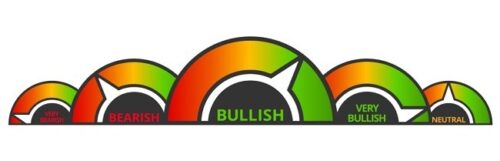
The rating output also differs from many tools. Instead of complex scoring scales, the Power Gauge simplifies its conclusions into three categories:
- Bullish
- Neutral
- Bearish
This structure makes interpretation straightforward. Instead of trying to interpret numerical scores, investors can quickly understand where a stock stands based on its classification.
The system also focuses on identifying what Chaikin describes as stocks positioned in the “right place at the right time,” meaning companies aligned with favorable conditions or trends.
This combination of multi-factor analysis, capital flow tracking, and simplified ratings creates a distinct structure compared to many traditional tools.
Power Gauge vs Zacks Rank
One useful comparison is between the Power Gauge and ranking systems like Zacks Rank.
Zacks is widely known for emphasizing earnings estimate revisions and analyst forecast changes as key signals. Its ranking system focuses heavily on earnings momentum as a primary driver of stock strength.
The Power Gauge takes a broader approach. Instead of focusing primarily on earnings revisions, it incorporates multiple categories of signals including company strength indicators, technical behavior, and capital movement patterns.
This creates a philosophical difference between the two approaches.
A system like Zacks focuses heavily on one category of predictive signals. The Power Gauge spreads its analysis across multiple signal categories.
From a workflow perspective, this means Zacks may appeal more to investors focused specifically on earnings momentum, while the Power Gauge may appeal more to investors looking for a broader condition assessment.
This highlights how different rating systems often prioritize different signals rather than one being universally better.
Power Gauge vs Morningstar Ratings
Another useful comparison is between the Power Gauge and Morningstar’s rating approach.
Morningstar is widely associated with fundamental analysis and valuation-based ratings. Its framework typically emphasizes whether a stock appears undervalued or overvalued based on long-term estimates.
The Power Gauge focuses on a different dimension. Instead of focusing primarily on valuation, it focuses on overall stock condition based on multiple signals.
This reflects two different philosophies:
Morningstar focuses on what a stock may be worth based on fundamentals.
The Power Gauge focuses on how a stock currently behaves based on multiple indicators.
These approaches can complement each other rather than compete directly. One evaluates value potential. The other evaluates current strength characteristics.
From an investor perspective, this shows how rating systems often serve different roles depending on what type of analysis someone prioritizes.
Power Gauge vs TipRanks
TipRanks represents another type of rating system built around analyst tracking.
Rather than building its own factor model, TipRanks focuses heavily on measuring the performance of analysts and aggregating their recommendations.
This creates a key difference in philosophy.
TipRanks relies on external opinions and historical analyst accuracy.
The Power Gauge relies on its internal model built around quantitative signals.
This difference reflects two distinct approaches to stock evaluation:
One approach evaluates what experts are saying.
The other evaluates what market signals are showing.
From how these systems operate, investors who prefer following analyst consensus may gravitate toward platforms like TipRanks, while investors who prefer structured signal models may find the Power Gauge framework more aligned with their research style.
Power Gauge vs Seeking Alpha Quant Ratings
Another meaningful comparison is with quantitative rating systems like Seeking Alpha’s Quant Ratings.
Both the Power Gauge and quantitative rating systems share a similar foundation in factor-based analysis. Each attempts to combine multiple signals into a unified evaluation.
The main difference comes down to presentation and workflow.
Quantitative platforms often present detailed factor breakdowns and numerical scoring.
The Power Gauge simplifies its output into three clear classifications, which may make it easier for investors who prefer simplified interpretation.
Another distinction is emphasis. While many quant systems focus heavily on financial ratios and factor scores, the Power Gauge incorporates capital flow analysis as a core component.
This reflects Marc Chaikin’s long focus on institutional trading behavior as part of stock evaluation.
From a usability standpoint, this makes the Power Gauge feel more like a structured rating assistant rather than a raw factor dashboard.
Power Gauge vs Stock Screeners Like Finviz
Stock screeners represent another category often confused with rating systems.
Screeners like Finviz allow investors to filter stocks based on user-selected criteria. Investors can choose factors like revenue growth, valuation ratios, or technical indicators.
This is very different from how the Power Gauge operates.
Screeners require investors to decide which signals matter and how to combine them.
The Power Gauge already provides a structured model that combines signals automatically.
From a practical standpoint, this creates a major difference in workflow.
Screeners are search tools.
The Power Gauge is an evaluation tool.
Investors comfortable building their own criteria may prefer screeners.
Investors who want a pre-built evaluation structure may find a rating system easier to use.
This comparison highlights how these tools serve different research roles.
 Where Power Gauge Has Advantages

After looking at how the Power Gauge compares conceptually with other tools, several practical strengths become clear.
One advantage is structure. The system provides a clear framework for evaluating stocks rather than requiring investors to build one themselves.
Another strength is simplicity. The three-rating classification system removes much of the interpretation complexity that comes with detailed scoring models.
I also see value in how the system incorporates both opportunity identification and risk awareness.
Many tools emphasize finding strong stocks but pay less attention to identifying weak ones.
The Power Gauge’s bearish ratings help reinforce the importance of avoiding deteriorating situations.
Another advantage is consistency. Because the same evaluation process is applied across thousands of stocks, the system promotes disciplined analysis rather than emotional decisions.
From a practical standpoint, the biggest advantage may be how the system encourages structured thinking.
Where Other Tools May Have Advantages
While the Power Gauge offers clear strengths, other tools may offer advantages depending on what an investor needs.
Some screening platforms offer more customization. Investors who prefer building highly specific filters may find that flexibility useful.
Advanced quantitative platforms may also provide deeper datasets for investors comfortable working with complex financial models.
Tools built specifically for traders may also offer faster signal updates focused on short-term timing rather than broader stock condition analysis.
These differences do not necessarily reflect weaknesses. They reflect design priorities.
The Power Gauge emphasizes structured evaluation and usability.
Other tools may emphasize flexibility, depth, or trading signals.
Understanding these differences helps investors choose tools aligned with their own process.
What Type Of Investor Power Gauge Fits Best
After analyzing how the system compares conceptually with other rating tools, it becomes clear the Power Gauge is best suited for certain types of investors.
Investors looking for structure may find the system particularly useful.
Beginners often struggle with how to organize research, and a defined rating framework can help.
Research-oriented investors may also benefit. Because the ratings reflect overall stock condition rather than short-term trading signals, the system fits well with investors focused on evaluating companies rather than timing entries.
The Power Gauge also fits investors who value discipline.
A structured rating model encourages consistency rather than emotional decision-making.
From a positioning standpoint, the system seems best suited for investors who want help organizing research rather than replacing it.
When Power Gauge May Not Be The Right Tool
Just as important as understanding where the Power Gauge fits is understanding where it may not.
Traders focused heavily on short-term timing may prefer tools designed specifically around technical trading signals.
Investors expecting fully automated decisions may also misunderstand the tool’s purpose.
The Power Gauge supports research decisions but does not replace investor judgment.
Investors looking for complete portfolio management tools may also need additional systems beyond a rating model.
Understanding these limits helps ensure the tool is used in the right context.
 Key Takeaways From Comparing Power Gauge To Other Rating Tools

Comparing the Power Gauge with other stock rating tools highlights that most differences come down to methodology and intended use.
The Power Gauge stands out through its multi-factor structure, its use of capital flow signals, and its simplified rating system.
Compared to traditional screeners, it provides more structure. Compared to complex quant tools, it provides simpler interpretation. Compared to analyst aggregation platforms, it relies more heavily on internal signals.
From a broader perspective, the Power Gauge fits best as a research organization tool. It helps investors filter opportunities, stay aware of risks, and maintain a structured evaluation process.
Understanding how it compares with other tools makes it easier to see where it fits within a broader investment research toolkit and how it can be used alongside other approaches rather than instead of them.

 Tags:
Tags: