

If you’ve ever watched an old movie showing traders shouting and waving papers on a crowded stock exchange floor, you’ve seen where it all began. That was the heart of open outcry trading, the system that once powered the world’s biggest financial markets.
Today, those shouts have been replaced by quiet screens and lightning-fast computers. The evolution of stock trading has turned what was once a noisy, human-driven process into a digital network powered by algorithms, artificial intelligence, and global connectivity.
This story of change, from floor trading to electronic trading, is more than a tale about technology. It’s about how innovation opened doors for millions of everyday investors and reshaped the way money moves around the world.
What Stock Trading Really Means
At its core, stock trading is simply buying and selling ownership in companies. Each share represents a small piece of a business, and owning it means you share in both its profits and its risks.
The stock market is the system that makes all this possible. It connects people who want to buy shares with those who want to sell them. Today, this happens instantly on digital exchanges such as the New York Stock Exchange (NYSE) and Nasdaq, but it wasn’t always that way.
In the early history of stock exchanges, everything depended on human effort, face-to-face communication, and handwritten notes.
The Early Days: Life on the Trading Floor
In the 1800s and well into the 20th century, trading happened on physical exchange floors. Brokers and traders gathered in large rooms, shouting prices and waving papers in a method known as open outcry trading.
Each trade started with a verbal agreement and ended with a handwritten ticket passed to a clerk. Deals depended on quick thinking and personal relationships. Prices could change within seconds, and only those physically present could participate.
It was an exciting time but also an exclusive one. Only licensed traders could access the floor, and the process was slow. Information moved no faster than a human voice. For decades, this was how the market worked, until technology began to whisper a different idea — that trading could happen faster, cheaper, and from anywhere.
 The Birth of Electronic Trading Systems
 The Birth of Electronic Trading Systems
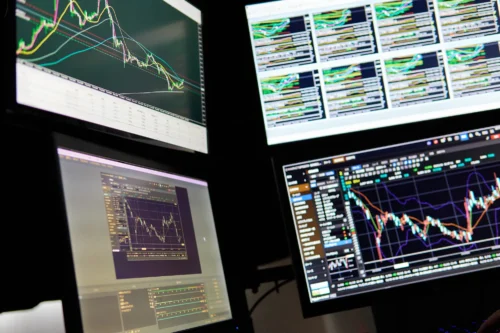
The digital transformation of stock markets began in the 1970s, when computers started making their way onto trading desks. In 1971, the NASDAQ launched the first electronic trading system, displaying stock quotes on screens instead of chalkboards. For the first time, brokers could see prices without shouting across the room.
Soon after, the NYSE introduced the DOT system, which allowed small trades to be sent electronically to the floor. It was a small step, but it marked the beginning of a new era in the trading technology timeline.
By the 1990s, the internet connected investors directly to the markets. Online brokers like E*TRADE and Ameritrade made it possible for anyone with a computer to buy and sell shares. This was when the history of stock trading began to open up to ordinary people.
Electronic systems also gave rise to electronic communication networks (ECNs) — digital platforms that automatically matched buyers and sellers. They removed the need for human middlemen and allowed trades to happen in seconds.
The move from paper to pixels changed everything. Floor trading vs electronic trading wasn’t just a matter of convenience; it was a revolution that made investing faster, more transparent, and far more accessible.
The Rise of Algorithmic Trading
As technology advanced, traders realized computers could do more than just display prices — they could make decisions. This idea sparked the algorithmic trading evolution, a transformation that changed how markets operate forever.
Algorithmic trading means using computer programs to execute trades automatically based on pre-set rules. These programs can scan markets, compare prices, and buy or sell in milliseconds.
In the early 2000s, algorithms began replacing manual strategies. Instead of reacting to markets, they started predicting them. This shift marked one of the most significant moments in the evolution of financial markets.
For example, if an algorithm detects a stock price rising quickly, it might instantly buy before the price climbs further, then sell seconds later for a small profit. Multiply that by thousands of trades each minute, and you can imagine how much the game changed.
The history of algorithmic trading in the stock market is filled with both progress and caution. Algorithms made trading more efficient, but they also created new risks. The 2010 “Flash Crash,” when the Dow Jones dropped nearly 1,000 points in minutes before recovering, showed how fragile an automated system could be when things go wrong.
Still, the rise of algorithmic trading reshaped global markets. It made trades cheaper, improved liquidity, and removed much of the emotional decision-making that once led to costly mistakes.
High-Frequency Trading and Market Microstructure
As computers grew faster, a new form of automation emerged: high-frequency trading (HFT). These traders used advanced networks and automated trading systems to execute thousands of orders per second.
This speed changed the structure of markets — what experts call market microstructure changes. Prices began moving in tiny increments measured in fractions of a cent. Liquidity improved, meaning there were always buyers and sellers available, but volatility sometimes increased too.
The high-frequency trading history shows both the promise and the problems of technology. On one hand, HFT improved efficiency and reduced transaction costs. On the other, it made markets more sensitive to technical errors and sudden swings.
Fortunately, regulators such as the Securities and Exchange Commission (SEC) responded by creating rules that slow trading during extreme volatility, helping protect investors from flash crashes.
The Retail Revolution: Trading for Everyone
In the 2010s, technology gave everyday investors tools that once belonged only to professionals. Trading apps like Robinhood and Fidelity’s free platforms made it possible to buy shares with no commission fees.
Suddenly millions of people began investing from their phones. The differences between floor trading and digital trading had never been greater. What once required a broker and a call to the exchange could now happen with a few taps on a screen.
This digital transformation of stock markets turned investing into something ordinary people could do in their spare time. It was exciting, but it also carried risks. The ease of trading sometimes encouraged speculation instead of thoughtful investing.
Still, this democratization of finance changed the world. For the first time, nearly anyone could participate in wealth creation through the markets.
How Algorithms Influence Modern Stock Trading
Today’s algorithms go far beyond simple price rules. Many use artificial intelligence (AI) and machine learning to detect patterns in data. Some even use natural language processing (NLP) to read financial news and social media, gauging market sentiment before making trades.
These systems run on cloud computing platforms that can analyze millions of data points in seconds. They have become an essential part of how modern markets function.
But even with all this automation, humans remain vital. Algorithms can process numbers, but they can’t understand context, ethics, or emotion. The best traders use technology as a tool, not a replacement for judgment.
As AI continues to improve, experts predict even more sophisticated trading algorithms will appear. Yet the goal remains the same as it was under that old buttonwood tree centuries ago — to connect people, ideas, and capital in a fair and efficient way.
 The Future of Trading Algorithms
 The Future of Trading Algorithms
Looking ahead, the future of trading algorithms will likely involve greater personalization and smarter automation. Some researchers are already exploring quantum computing, which could perform calculations thousands of times faster than current systems.
Others are experimenting with blockchain technology to create decentralized exchanges, where trades are recorded transparently and securely without a central authority.
Still, no matter how advanced the tools become, trading will always require human insight. Markets reflect emotion as much as logic, and no machine can fully capture that balance.
Frequently Asked Questions
When did electronic trading start?
Electronic trading began in 1971 with NASDAQ, but it became common in the 1990s as online brokers and internet access grew.
How were floor traders replaced by computers?
Computers started handling orders faster and more accurately than humans. Over time, electronic networks and automation made floor trading unnecessary.
What are the pros and cons of algorithmic trading?
The advantages include speed, lower costs, and better liquidity. The downsides are market instability during crashes and reduced transparency for smaller investors.
How has high-frequency trading changed markets?
It improved efficiency and lowered costs, but also made markets more sensitive to technical problems and rapid price swings.
What is the future of trading algorithms?
AI-driven systems and blockchain-based platforms are shaping the next phase of trading, but human decision-making will always remain at the core of investing.
Conclusion
The evolution of stock trading, from open outcry on busy exchange floors to quiet algorithms in data centers, reflects how far technology and finance have come together.
Each step — from the history of stock trading to the rise of algorithmic trading — made markets faster, more efficient, and more inclusive. But progress also brought new responsibilities for investors, regulators, and technologists.
Today, trading is no longer a privilege for a few. It’s a global network accessible to anyone with curiosity and discipline. Understanding how trading evolved helps us appreciate both its power and its limits — and reminds us that behind every trade, no matter how automated, there’s still a human story.

 Tags:
Tags: