
When going to buy your first ETF on Fidelity, you may find yourself staring at unfamiliar words like “ticker,” “limit order,” “expense ratio,” and “settlement” and wondering whether one wrong click could mess everything up.
The good news is that buying an ETF on Fidelity in 2026 is a fairly simple process once you understand what you are buying, how Fidelity’s trade ticket works, and what happens after you place the order.
This guide will walk you through how to buy an ETF on Fidelity in plain English, starting from the very beginning.
What Is an ETF?
An ETF, short for exchange-traded fund, is an investment fund that trades on a stock exchange, much like an individual stock.
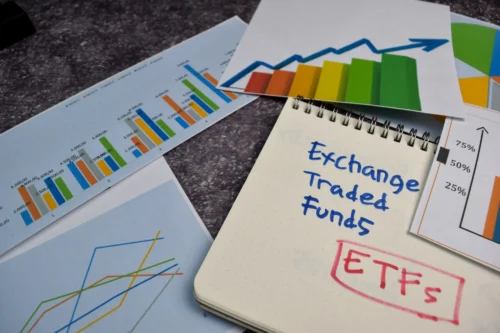
Instead of buying one company, an ETF usually lets you buy several investments in a single trade. That one ETF might hold hundreds of stocks, bonds, or other assets, depending on the fund’s goal.
A simple way to picture an ETF is to imagine a grocery cart. A single stock is like buying one apple. An ETF is like buying a basket that may include apples, oranges, bananas, and grapes, all wrapped up neatly inside. You still own one item in your Fidelity account, but inside that item are many different holdings.
This is why ETFs are popular with beginners: They can make diversification easier. Diversification means spreading your money across different investments instead of relying on one company or one bond. While there’s no way to remove risk, diversification can reduce the damage if one holding performs poorly.
ETFs typically follow an index, containing holdings similar to what you’d see in the S&P 500, for instance. That means they’re a carefully thought out pool of assets and not just random selections.
In any case, the main idea here is simple. When you buy an ETF, you are buying shares of a fund that owns other investments.
What Does It Mean to Buy an ETF on Fidelity?

To buy an ETF on Fidelity, you use a Fidelity brokerage account to place an order for ETF shares. A brokerage account lets you buy and sell investments such as stocks, ETFs, bonds, mutual funds, and other securities.
Fidelity offers self-directed brokerage accounts, which means you choose your own investments. Depending on the path you choose, your setup typically has no account minimum or account fees, allowing you to invest with as little as $1.
Buying an ETF on Fidelity does not mean Fidelity is choosing the ETF for you. Fidelity provides the platform, research tools, order screen, account records, and custody of the investment. You still decide which ETF to buy, how much to invest, and whether the ETF fits your goals.
The platform often shows research, ratings, and even eduational content, but you’re ultimately responsible for the investment decisions you make.
Why Beginners Often Choose ETFs First
ETFs can be beginner-friendly because they let you start with a broad investment instead of trying to pick the next winning company. For someone new to investing, choosing a single stock can feel like guesswork. Choosing a broad ETF can feel more like choosing a general direction.
For example, someone investing for retirement might prefer a broad-market stock ETF to gain long-term exposure to many companies.
Someone saving for a shorter-term goal might look at lower-risk bond ETFs or money market alternatives instead. The most suitable choice depends on your goal, timeline, and comfort with risk.
ETFs are also easy to trade. Since they trade on exchanges, you can buy and sell them during normal market hours through Fidelity’s trade screen. This differs from many mutual funds, which usually trade once at the end of the day.
That convenience cuts both ways. It is nice to have flexibility, but it can also tempt beginners to trade too often. Most long-term strategies do not involve trading often, but finding reasonable investments and giving the plan time to work.
What You Need Before Buying an ETF on Fidelity
Before you buy an ETF on Fidelity, you need a Fidelity account that can trade ETFs. For most beginners, that will be a regular brokerage account, a Roth IRA, or a traditional IRA.
A Roth IRA and a traditional IRA are retirement accounts with special tax rules, while a regular brokerage account is more flexible and does not have the same retirement contribution limits.
You also need money in the account. Fidelity lets you move money in several ways, including electronic funds transfer. These bank transfers move through the Automated Clearing House system, which is the network commonly used for such purposes.
Keep in mind that funds can take 1 to 3 business days to process, but you may still be able to trade immediately if you send them before 4 PM Eastern time on a business day. That means even though your funds aren’t in Fidelity’s hands yet, you can still make trades on a sort-of honor system that the money’s on its way.
You should also know how much you want to invest before you open the trade ticket. Fidelity supports fractional shares for U.S. stocks and ETFs, which means you can buy part of a share instead of a full share. While not always the case, you can sometimes do this with as little as $1.
This makes the process easier for beginners. If an ETF trades at $420 per share and you only want to invest $50, fractional trading may allow you to buy $50 worth instead of waiting until you have enough for a whole share.
How to Choose an ETF Before You Buy
The most important part of buying an ETF happens before you click “Place order.” The trade itself is quick, but choosing the right ETF for your purpose takes more thought.
Start with your goal. Money for retirement twenty or thirty years from now can usually handle more ups and downs than money needed next year. You need to treat money for a house down payment, emergency savings, or near-term tuition more carefully than long-term investing money.
Then look at what the ETF owns. A broad U.S. stock ETF is very different from a semiconductor ETF, a high-yield bond ETF, or a bitcoin-related exchange-traded product. The name of a fund can give clues, but it is not enough. You want to understand the fund’s objective, holdings, risks, and fees.
Fidelity’s ETF research tools can help with that. Account holders have access to investment research tools, screeners, third-party research, ETF information, charts, news, commentary, prospectus-stated objectives, and ETF comparison features.
One beginner mistake is choosing an ETF only because it has performed well recently. Recent performance can be interesting, but it does not tell you what will happen next. A fund can look great after a hot year and still be too risky, too narrow, or too expensive for your plan.
A better approach is to ask whether the ETF gives you the kind of exposure you actually want, which simply indicates the sector (or sectors) the ETF represents.
If you want broad U.S. stock exposure, a narrow sector ETF may not match that goal. If you want lower volatility, a stock ETF may still swing more than you expect.
Understanding ETF Costs on Fidelity
It’s common to wonder how much it actually costs to buy ETFs on Fidelity, since fees used to be a major barrier.
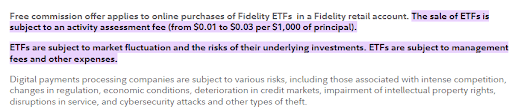
At the time of writing, Fidelity doesn’t charge any commission for online U.S. stock, ETF, and option trades, and no minimums to open an account. That certain funds may have a transaction fee called an expense ratio, so be sure to check for that.
An expense ratio is the annual operating cost of the fund, shown as a percentage of the fund’s average net assets. You do not usually receive a separate bill for it.
Instead, the cost comes straight from the fund’s assets, which reduces its return over time. Think of them as operating costs getting passed on to you.
There can also be trading costs that are less obvious. One of them is the bid-ask spread. The bid is the price buyers are willing to pay, whereas the ask is the price sellers are willing to accept.
The spread is the gap between those two prices, and narrower spreads generally mean lower trading costs.
For a long-term beginner buying a popular, highly traded ETF, the spread may be small. Still, it is worth understanding because some niche ETFs can trade with wider spreads. That means you may pay a little more when buying or receive a little less when selling.
How to Buy an ETF on Fidelity Step by Step
Once your Fidelity account is open, funded, and ready to trade, the actual purchase is straightforward. On Fidelity.com, you start by logging in and selecting the trade option.
From there, you look up the ETF symbol, choose “Buy,” enter the quantity, choose an order type, choose the time in force, preview the order, and then place it if everything looks correct.
The ETF symbol is the short code used to identify the fund. It is often called a ticker symbol. For example, a fund might have a three-letter or four-letter ticker. When you enter the ticker on Fidelity, make sure the name of the ETF matches what you intended to buy. Many tickers look similar, and you should not rush this part.
Next, you choose whether to buy by shares or dollars, depending on the options available for that ETF and the type of trade you are placing. Buying by shares means you enter the number of shares you want. Buying by dollars means you enter a dollar amount, and Fidelity calculates the fractional share amount when fractional trading is available.
Then you choose your order type. The two most common order types for beginners are market orders and limit orders. A market order is the fastest option and gets the trade done at the next available price, but that price is not guaranteed. On the flip side, a limit order lets you set the highest price you are willing to pay when buying, although there’s no guarantee the trade will go through.
Before placing the order, Fidelity shows a preview screen. This is your moment to slow down. Check the account, ticker, action, order type, estimated cost, and whether you are buying shares or a dollar amount. Once everything looks right, you place the order.
What Happens After You Place the Order?
After you place the order, it may fill right away, partially fill, or remain open, depending on the order type and market conditions. If you place a market order during normal market hours for a highly traded ETF, it often fills quickly.
Placing a limit order below the current ask price may not complete unless the market price moves to your limit.
Once the order fills, the ETF appears in your Fidelity account holdings. Your holding will show details such as the number of shares, market value, cost basis, and gain or loss.
Cost basis means the amount you paid for the investment, including relevant adjustments. It will matter later because it helps determine taxable gain or loss in a taxable brokerage account.
The trade also needs to settle. Settlement is the official exchange of cash and securities. In everyday language, it is when the trade fully clears behind the scenes.
On Fidelity, stock and ETF transactions usually settle in one business day.
If you are investing for the long term, settlement will usually not be something you think about much. It matters more if you are selling and quickly buying something else, withdrawing money, or trading frequently in a cash account.
How to Make Your ETF Investment Feel Less Intimidating
The best way to make buying ETFs less intimidating is to separate the decision from the click.
Before buying, understand what the ETF owns, what it costs, and why you want it. Then decide how much of your money belongs in that investment. A good ETF can still be wrong for you if it does not match your timeline or risk tolerance.
Risk tolerance means how much market movement you can handle without panicking. If a 10% drop would make you sell immediately, an aggressive stock ETF may feel more stressful than expected. If you are investing for decades, short-term price drops may be uncomfortable but normal.
Many beginners also benefit from starting small. Because Fidelity supports fractional ETF purchases, you do not need to make your first trade huge. A small first purchase can help you learn how the process works without feeling like every click carries life-changing pressure.
 Should You Use Fidelity’s ETF Screener?
Fidelity’s ETF screener can be useful when you do not already know which ETF you want to buy. It serves as a tool to help you narrow down investments using filters such as asset class, expense ratio, fund family, category, performance history, or other criteria.
The key is to use the screener as a learning tool, not as a magic answer machine. It can show you ETFs that match certain inputs, but it cannot know your full financial life.
For beginners, the most useful research habit is reading the fund’s summary page and prospectus. A prospectus is the official document that explains the fund’s objective, risks, fees, and other important details. It is not exciting reading, but it is where the important facts live.
You do not need to memorize every line, but it is helpful to understand the basics. What does the ETF invest in? What index or strategy does it follow? How much does it cost? What risks does the fund highlight? Does it overlap with investments you already own?
Common Misconceptions and Key Terms
A common misconception is that an ETF is automatically safe. ETFs can reduce single-company risk when they hold many investments, but they can still lose money.
Broad stock ETFs can fall when the stock market slides, and bond ETFs can lose value when interest rates move.
Another misconception is that “commission-free” means “cost-free.” Fidelity may charge $0 commission for many online U.S. ETF trades, but ETFs still have expense ratios, possible bid-ask spread costs, and potential taxes in taxable accounts.
Key Terms to Know
A ticker symbol is the short trading code for an ETF and is how you identify the exact fund on Fidelity’s trade screen. Always match the ticker to the fund name before placing an order.
A market order is an order to buy or sell as soon as possible at the next available price. It is fast, but the final price is not guaranteed.
A limit order is an order where you set your maximum buy price or minimum sell price. It gives you more control, but the order may not execute.
An expense ratio is the ongoing annual cost of owning the ETF, shown as a percentage. A 0.10% expense ratio means the fund’s annual operating expenses equal 0.10% of fund assets.
You do not usually pay it from your bank account directly, instead coming out of the fund’s assets and reduces returns.
A bid-ask spread is the gap between what buyers are offering and what sellers are asking. When the spread is narrow, the cost of trading is usually lower.
A fractional share is less than one full share. If an ETF costs more than you want to invest, fractional shares may allow you to buy a dollar amount instead. On Fidelity, you can access fractional shares for as little as $1.
Settlement is the official completion of the trade. Currently, most U.S. ETF trades settle one business day after you make a trade.
Frequently Asked Questions
Can I buy ETFs on Fidelity with $1?
Yes, in many cases, you can start very small because Fidelity supports fractional investing in U.S. stocks and ETFs. It’s possible to buy portions of U.S. stocks or ETFs by dollar amount on Fidelity with as little as $1.
Does Fidelity charge a fee to buy ETFs?
Fidelity offers $0 commissions for online U.S. stock, ETF, and option trades. However, you should still check the individual fund page because funds may have transaction fees up to $100. You should also remember that ETFs can have expense ratios and bid-ask spreads, even when the trading commission is $0.
Is it better to use a market order or limit order for an ETF?
A market order is simpler and usually fills quickly, but the exact price is not guaranteed. A limit order lets you set the highest price you are willing to pay when buying, but it may not fill. Beginners who want more price control often prefer limit orders, especially when buying ETFs that do not trade as heavily.
How long does it take for an ETF trade to settle on Fidelity?
When you buy a stock or ETF, transactions usually settle in one business day.
Can I sell my ETF anytime?
You can generally sell an ETF during normal market hours when the market is open, as long as there is a trading market for that ETF. However, selling may create taxes in a taxable brokerage account, and the sale price may be higher or lower than what you paid.
Not automatically. Fidelity, Vanguard, iShares, Schwab, and other fund providers all offer ETFs with different goals, costs, holdings, and risks. The better question is whether a specific ETF fits your goal, has reasonable costs, trades efficiently, and gives you the exposure you want.
Conclusion
Buying an ETF on Fidelity in 2026 is not as scary as it first looks. Once you understand the basic pieces, the process becomes clear. You open or use a Fidelity brokerage account, fund it, choose an ETF that fits your goal, enter the ticker, select buy, choose your dollar amount or share quantity, pick an order type, preview the trade, and place the order.
The bigger lesson is that investing is not just about learning where to click, but about knowing what you own and why you own it.
An ETF can be a simple, flexible way to begin investing because it can give you access to many holdings through one purchase. Fidelity makes that access easier with $0 online commissions for many U.S. ETF trades, fractional ETF investing, research tools, and a beginner-friendly trade process. Still, every ETF has risk, and every investor should understand the fund’s goal, costs, and role in their plan before buying.

 Tags:
Tags: